Productivity
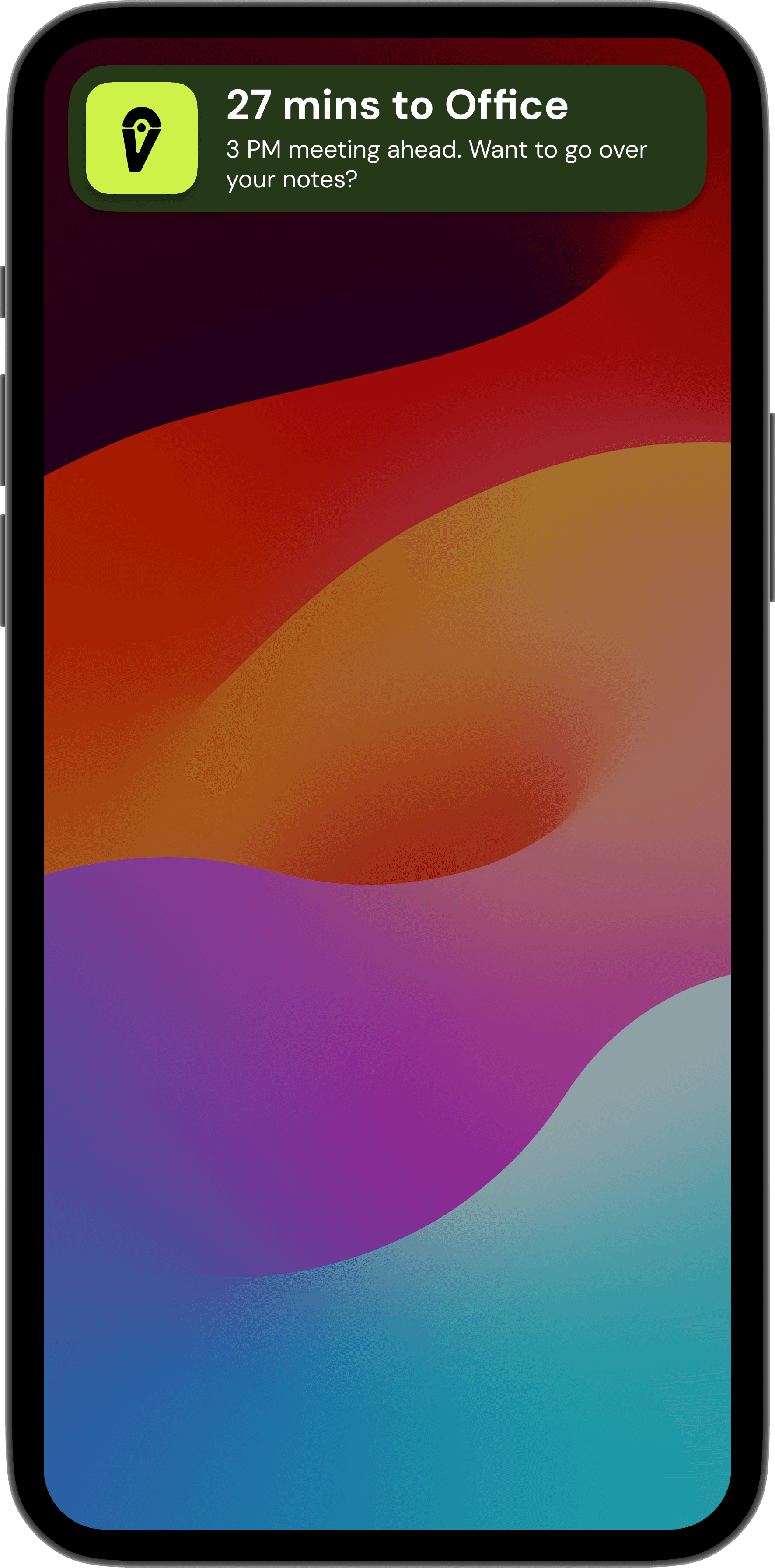
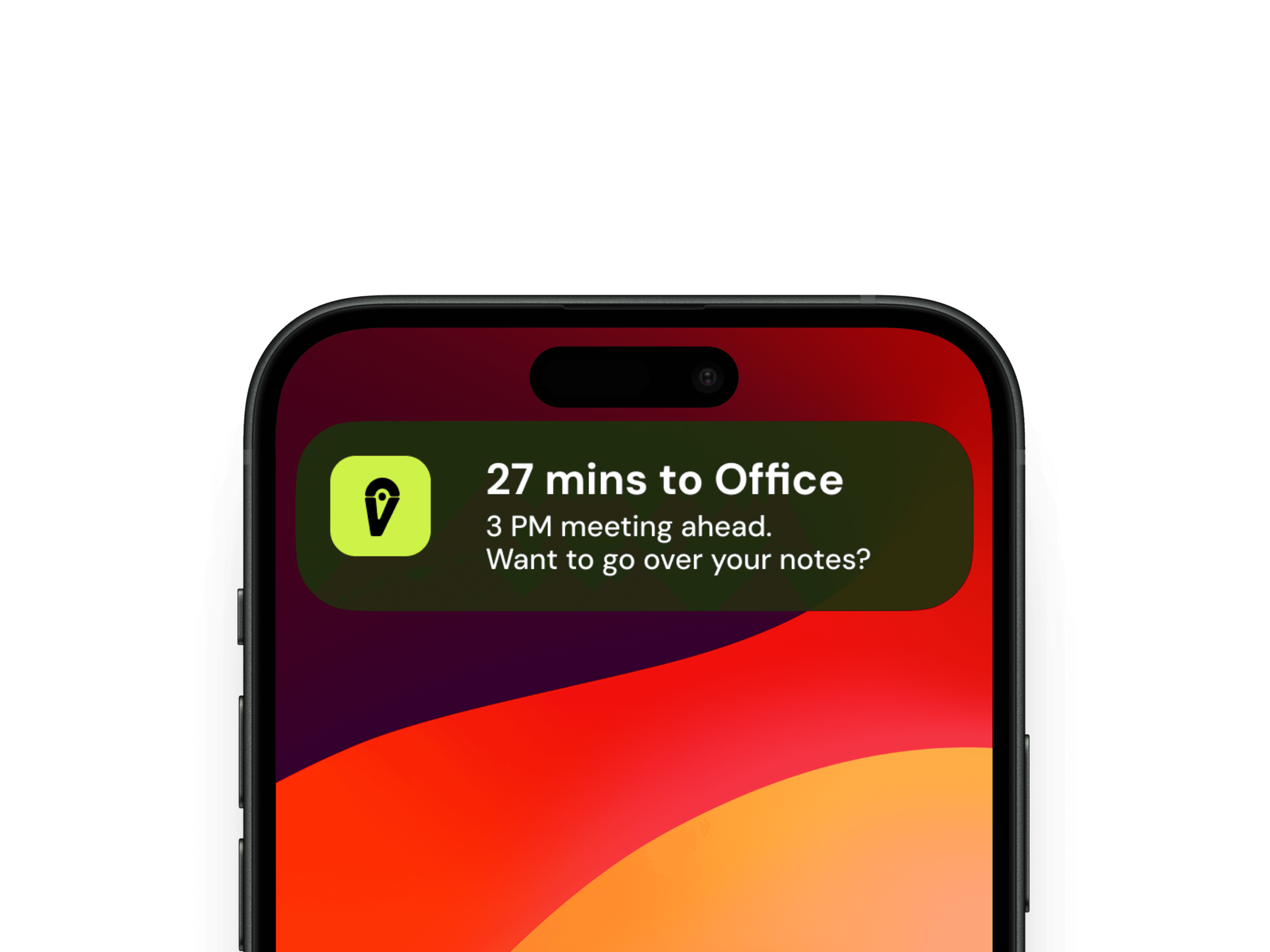
On the move? So are your tasks.
Navit helps you plan your day around your commute
PROJECT OVERVIEW
PROJECT OVERVIEW
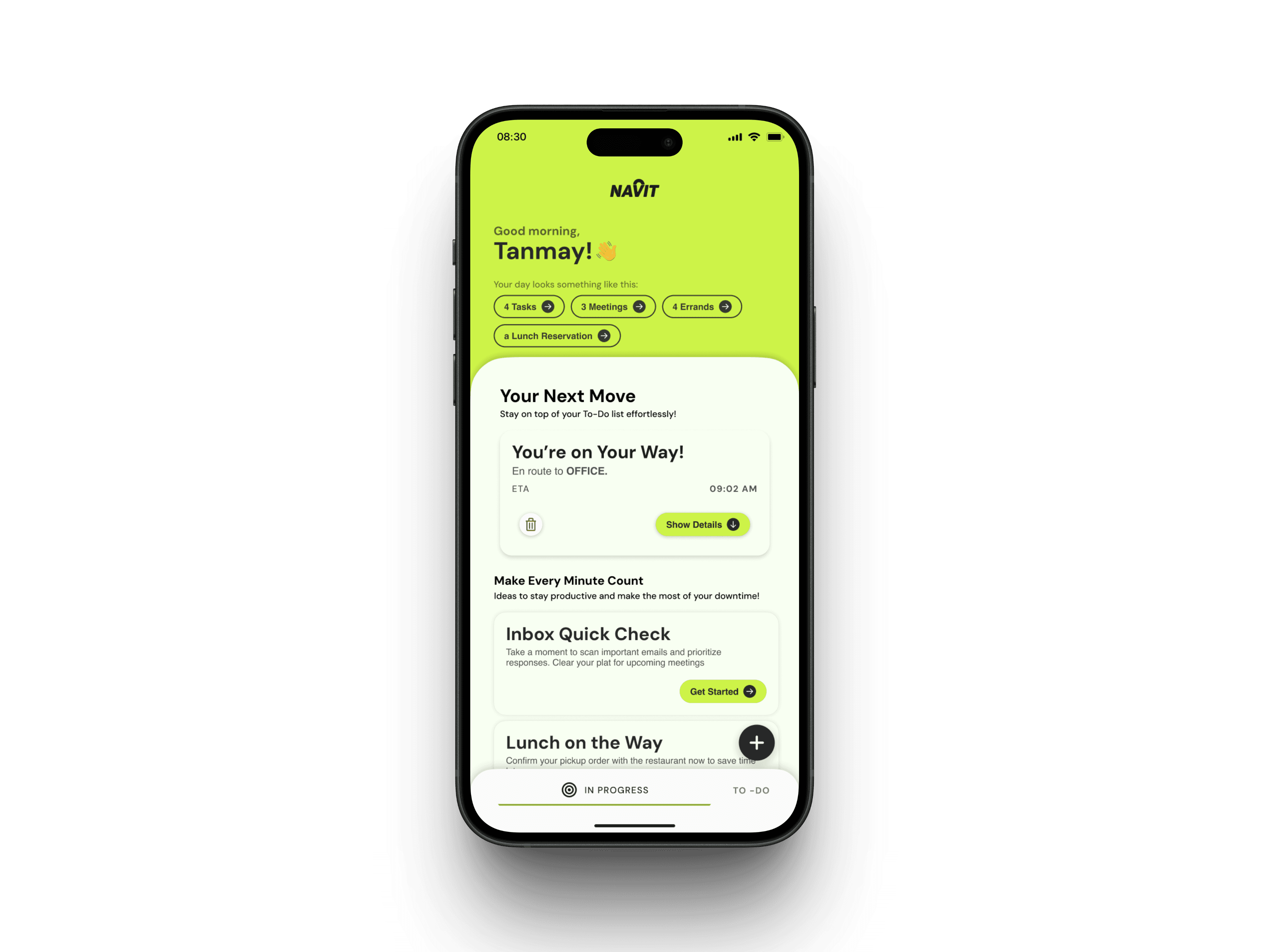
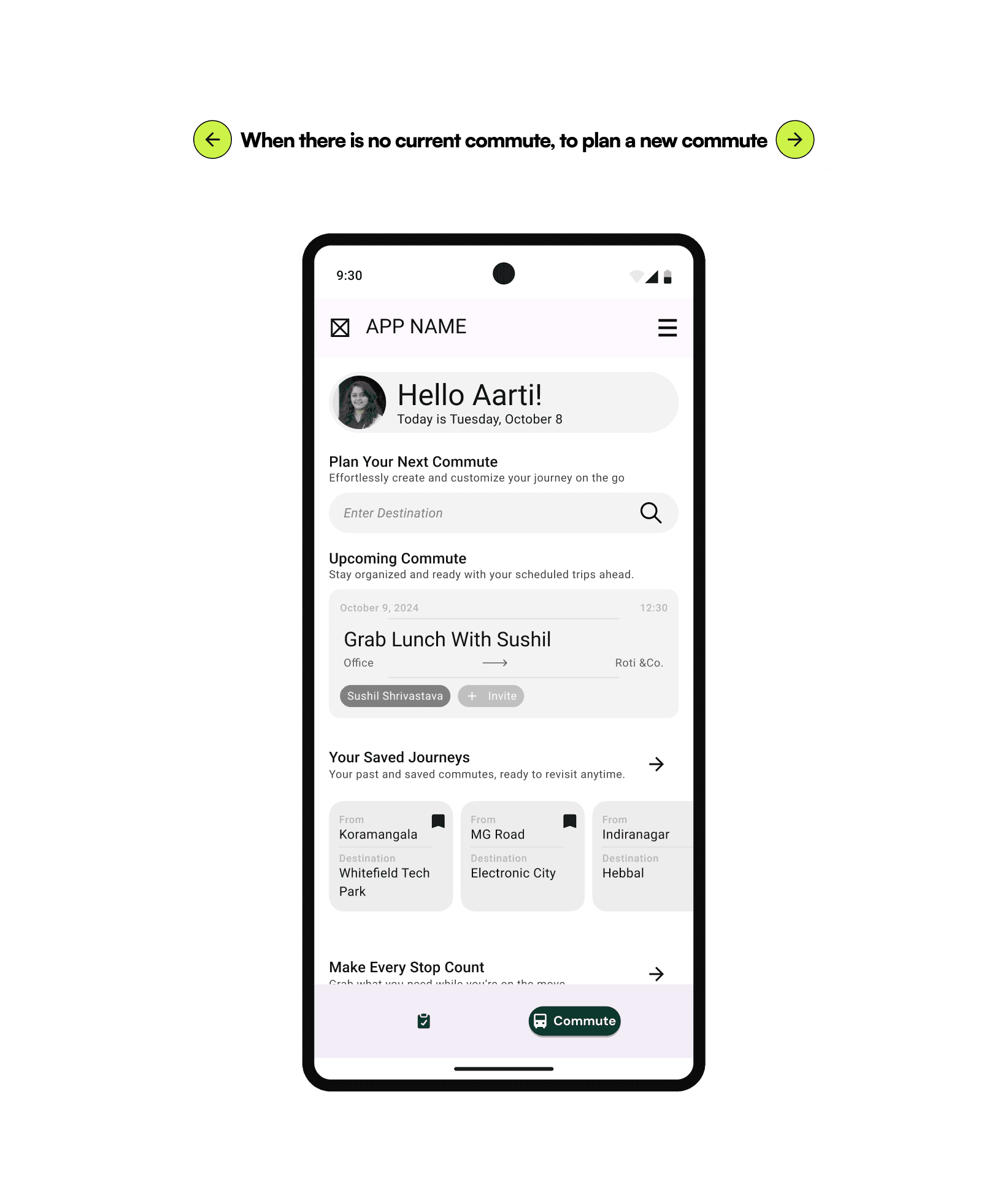
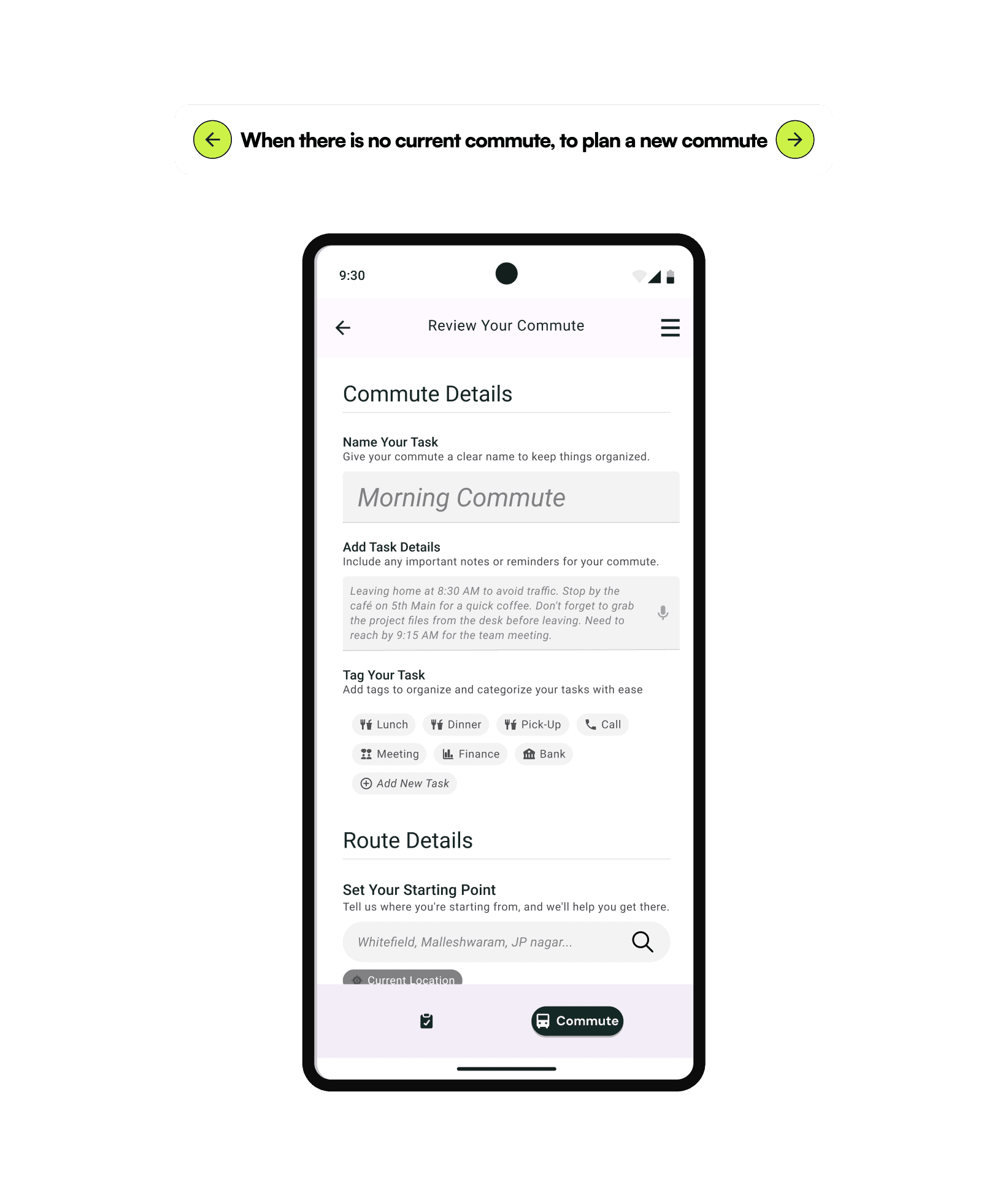
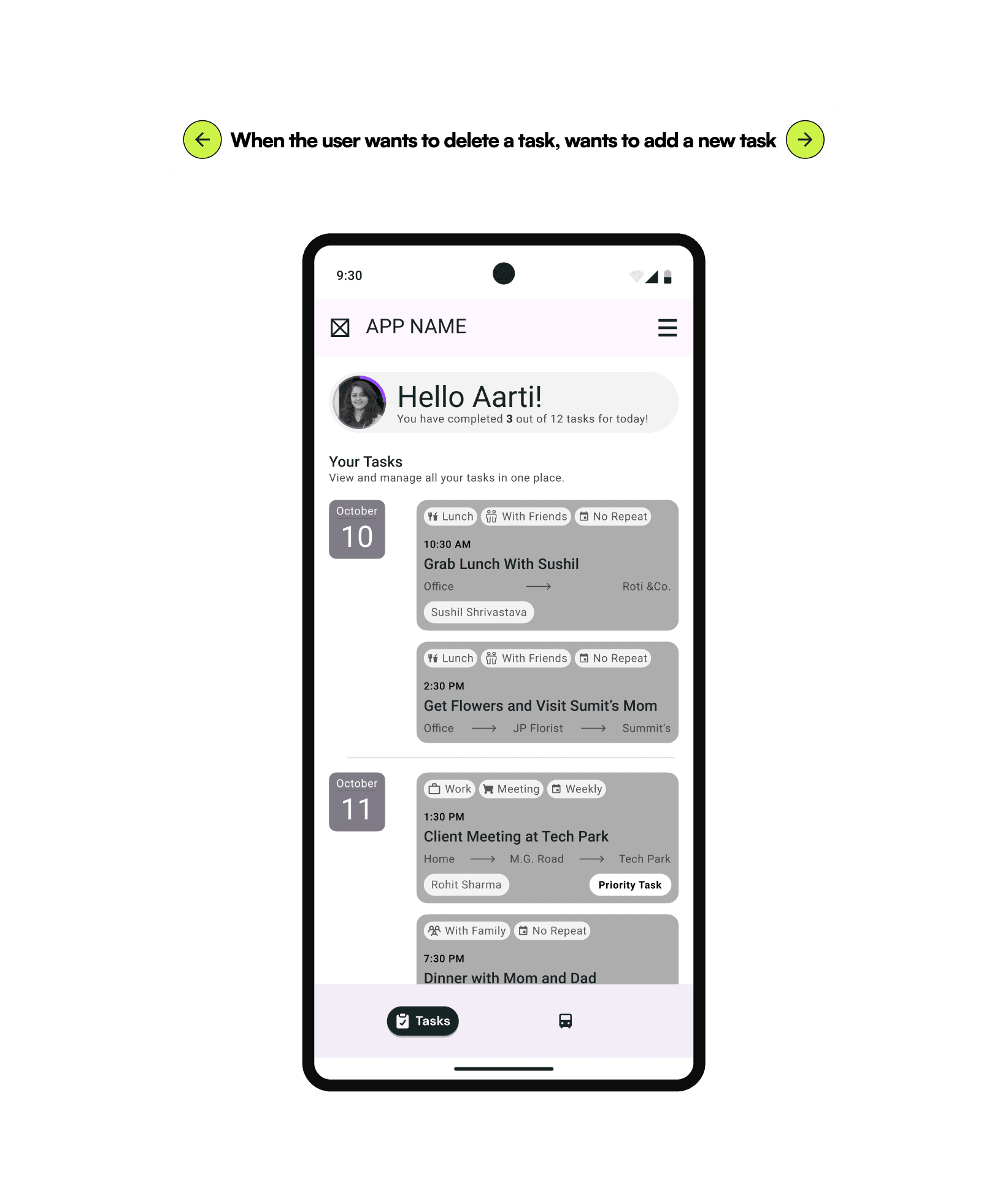
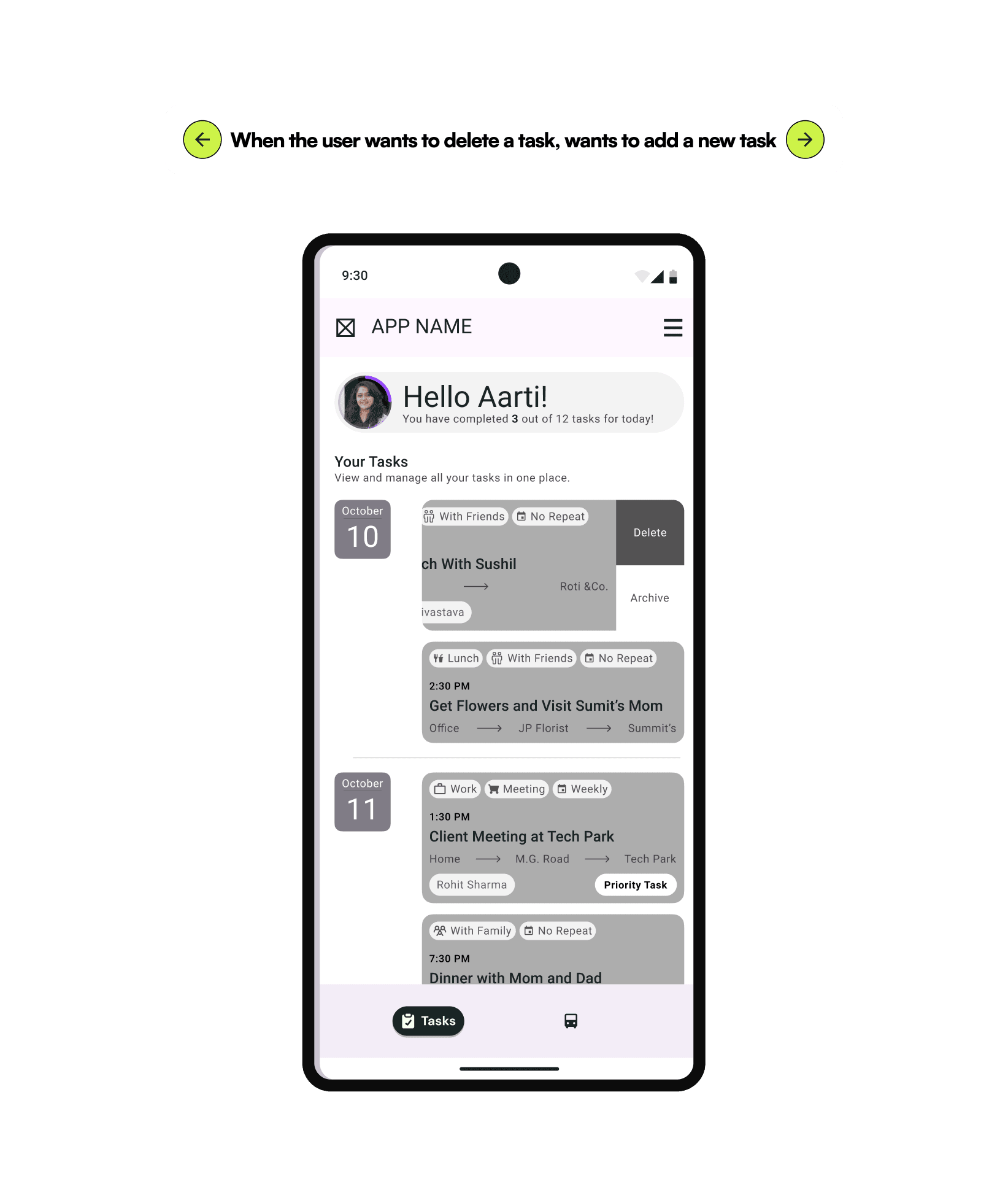
Navit transforms daily commutes into productive moments. By integrating smart, location-aware task planning, it helps you make the most of your transit time, ensuring no task is left behind.
Navit transforms daily commutes into productive moments. By integrating smart, location-aware task planning, it helps you make the most of your transit time, ensuring no task is left behind.
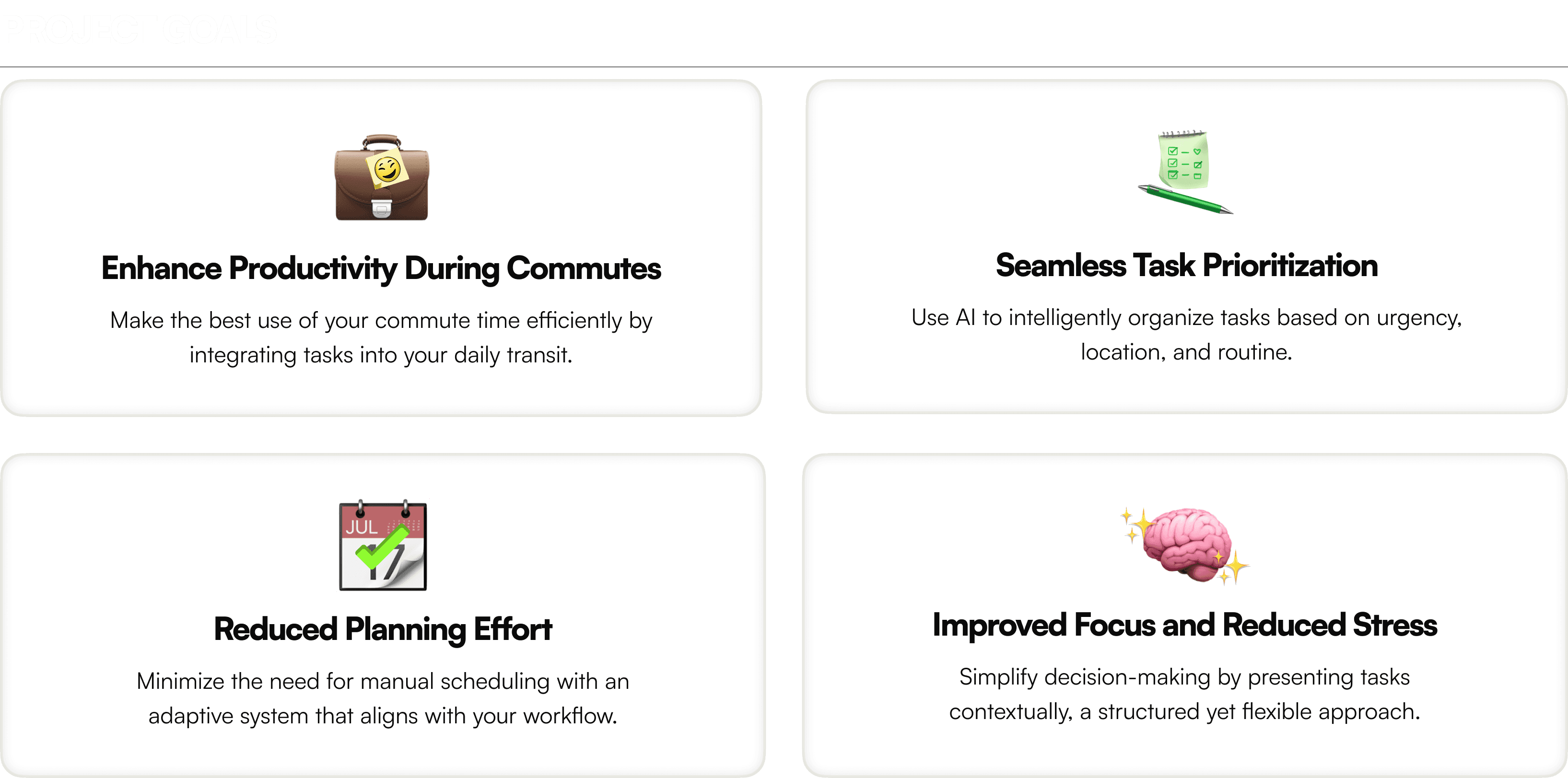
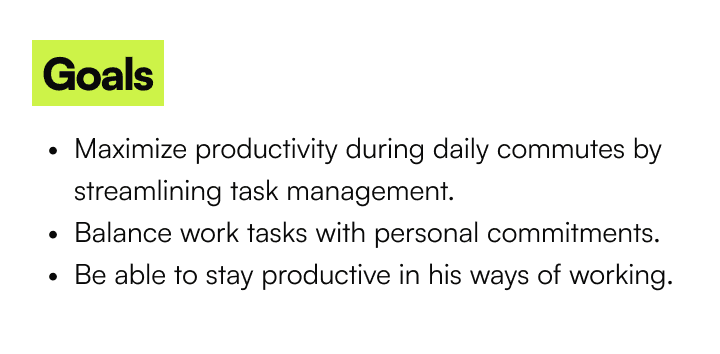
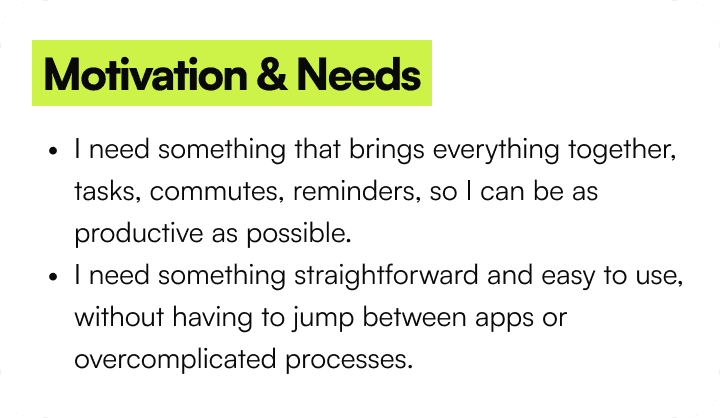
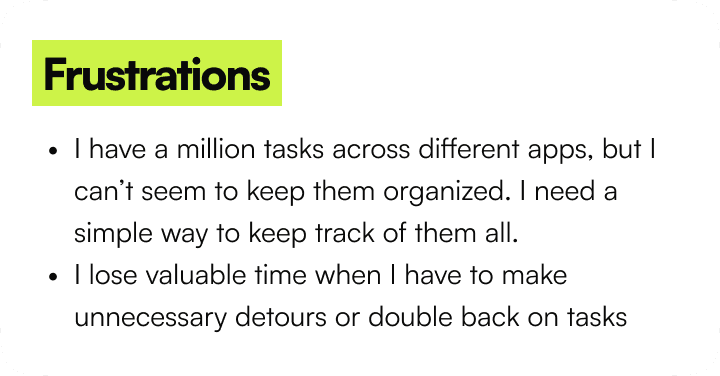
PROJECT GOALS


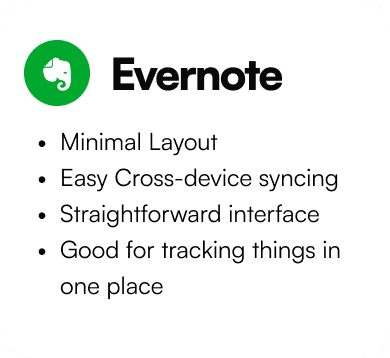
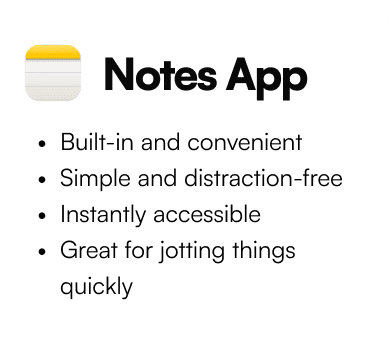
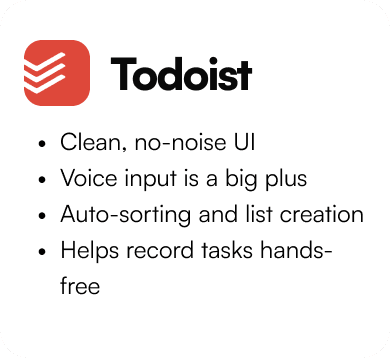
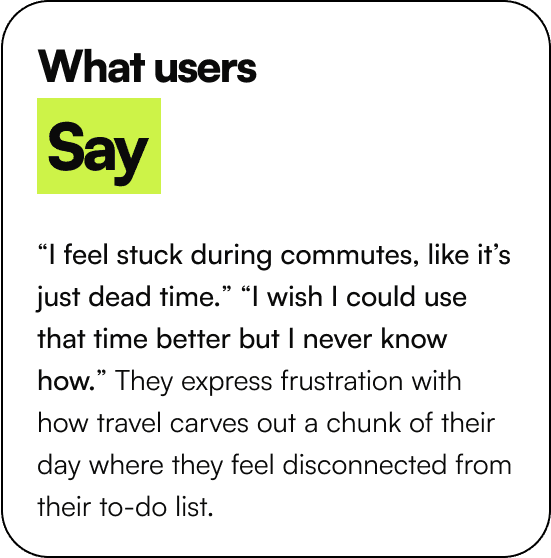
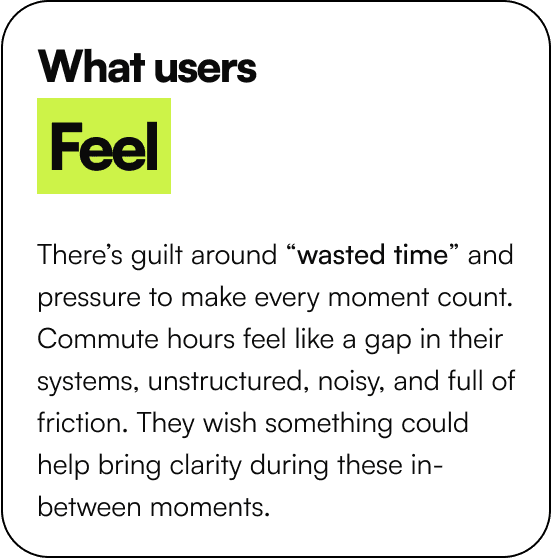
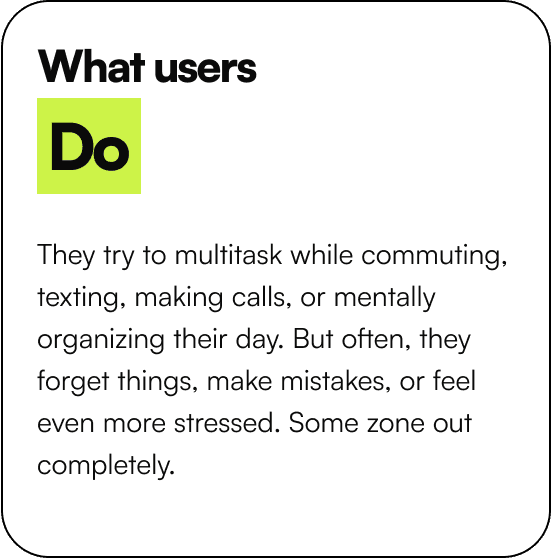
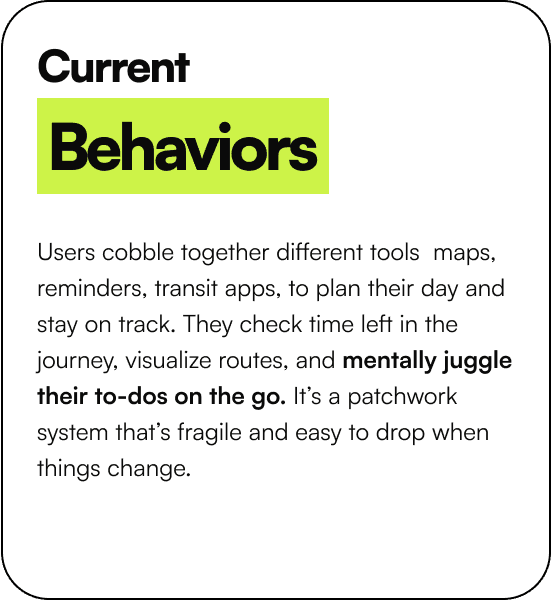
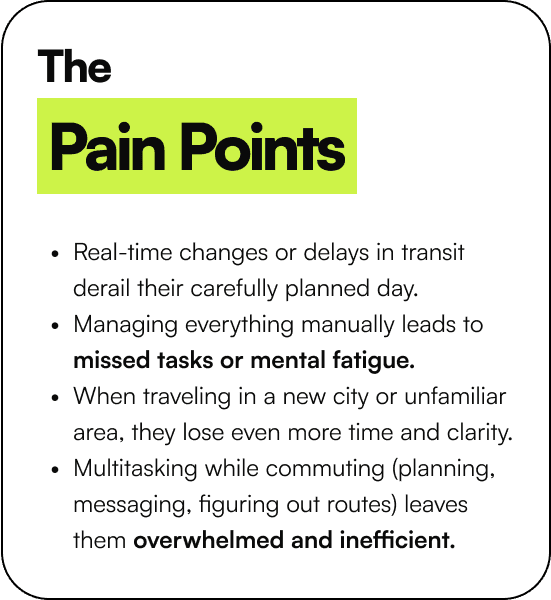
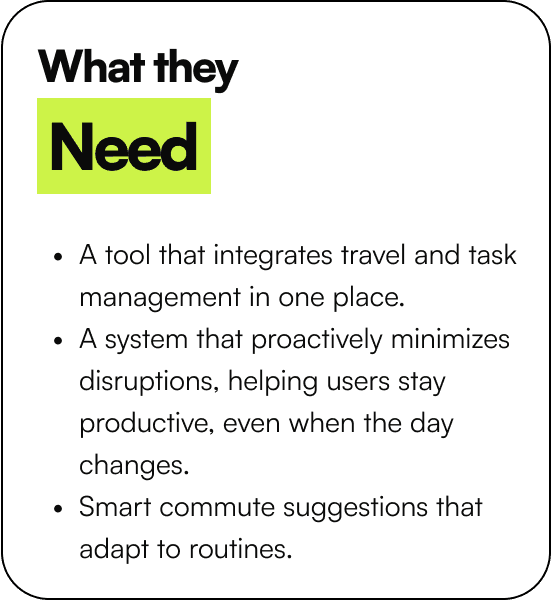
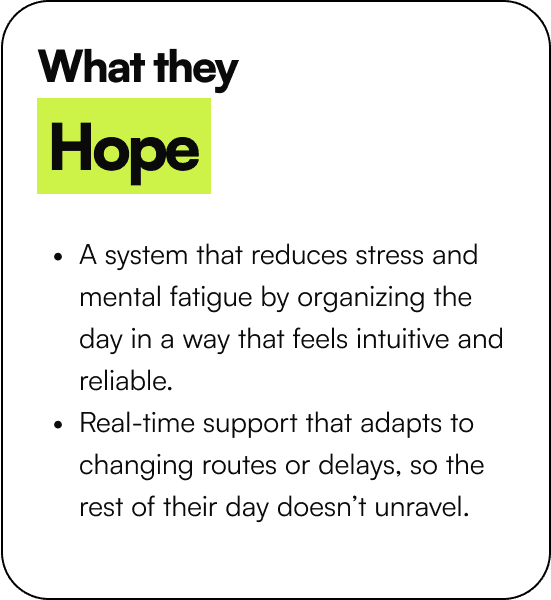


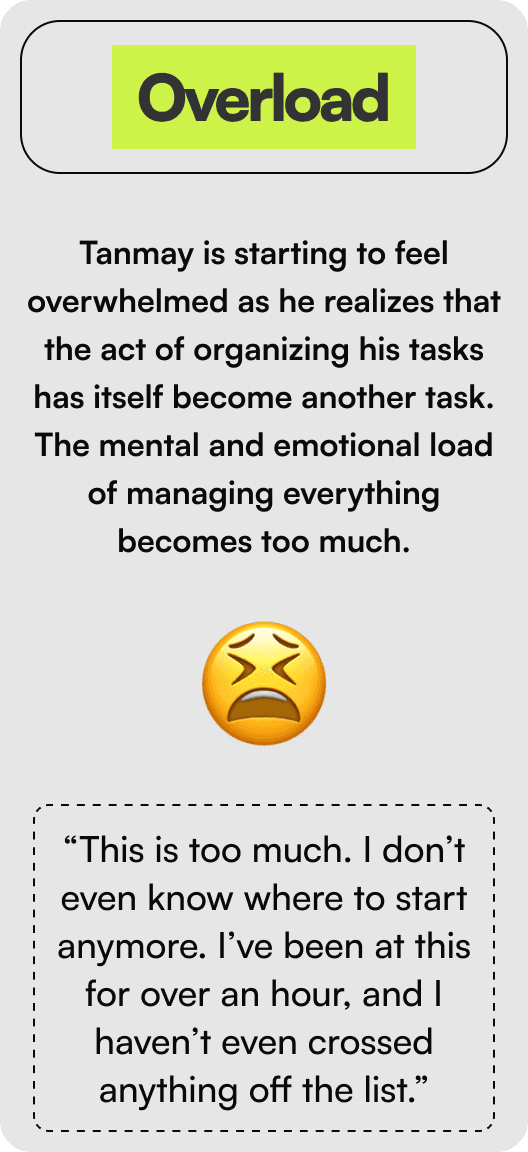
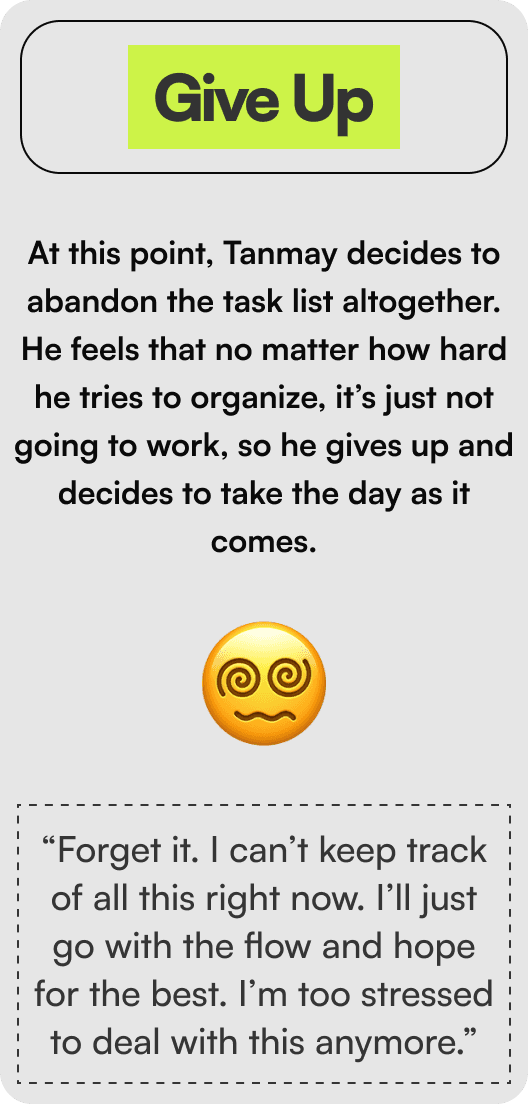

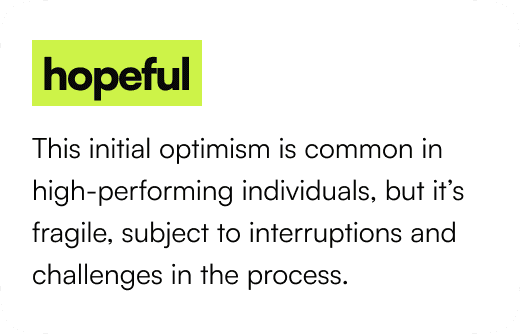
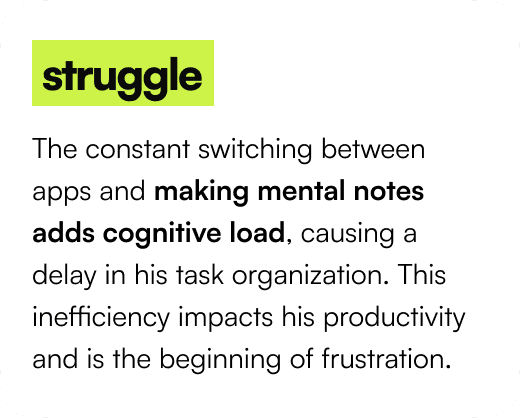
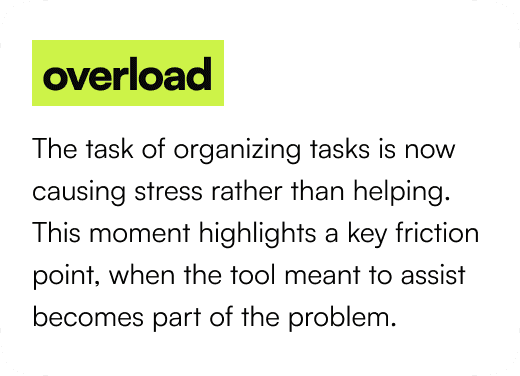
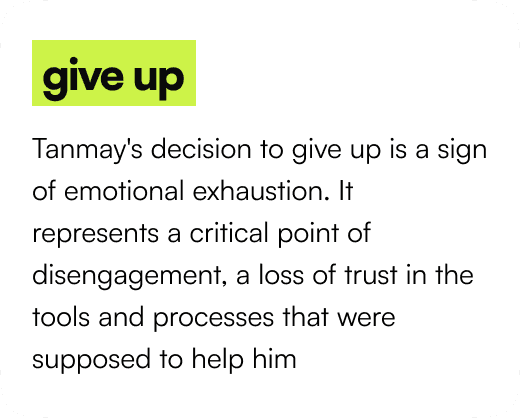
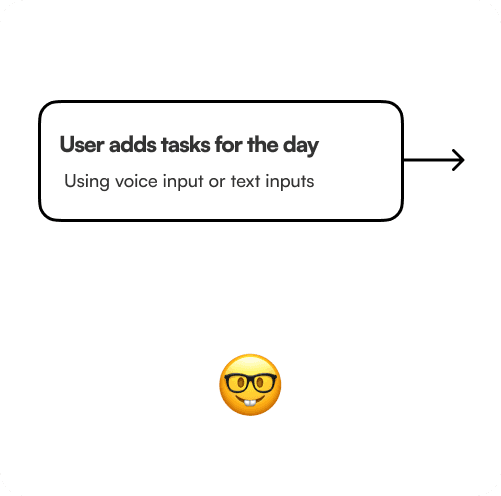
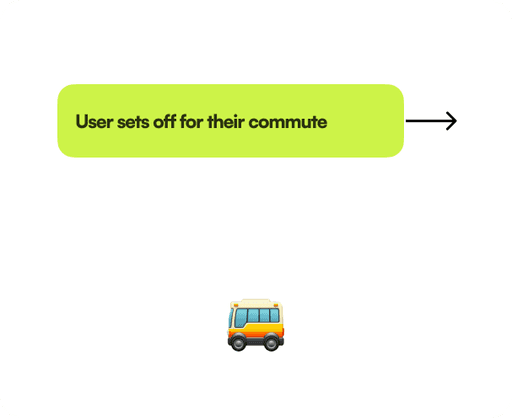
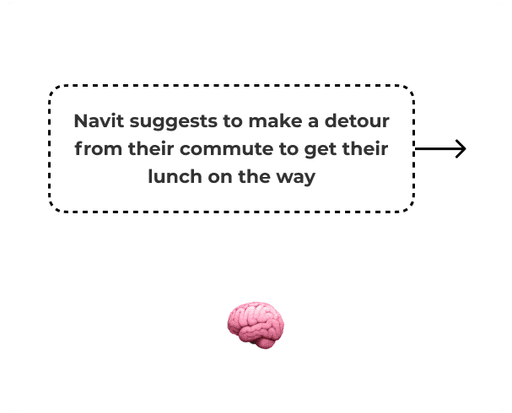
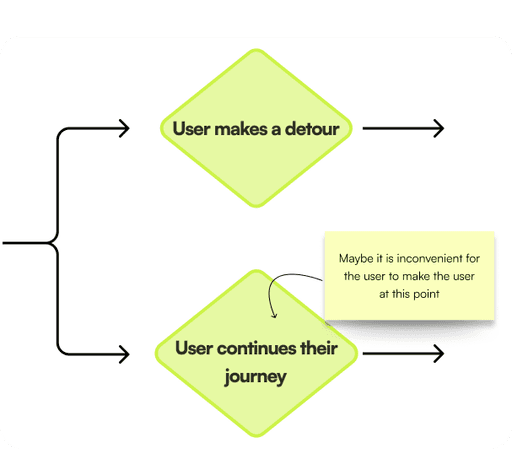
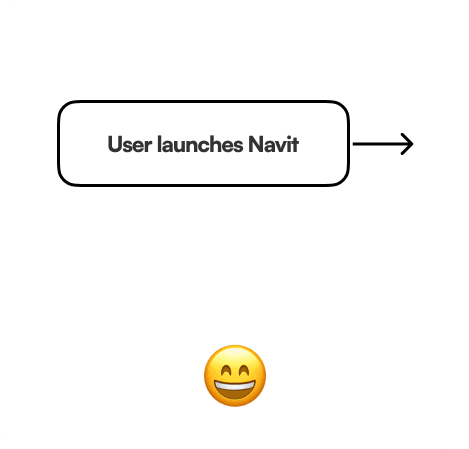
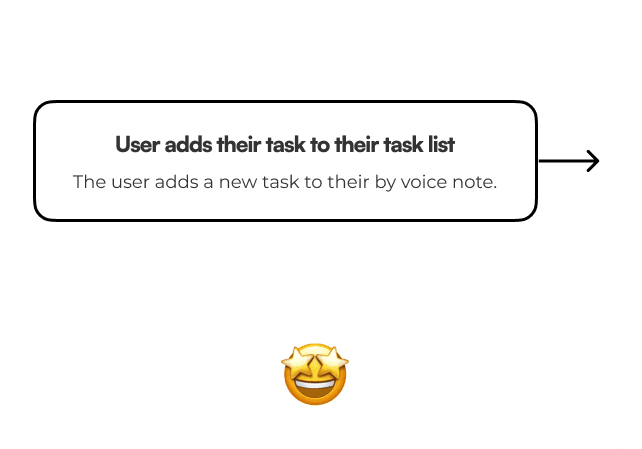
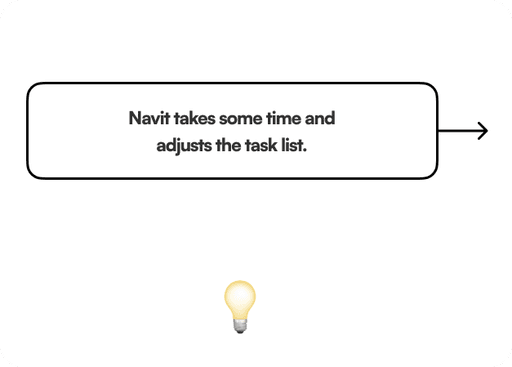
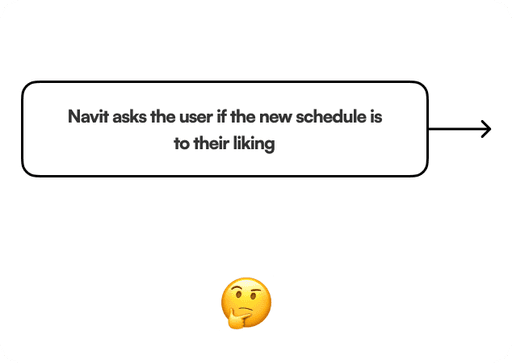
Validation the Problem
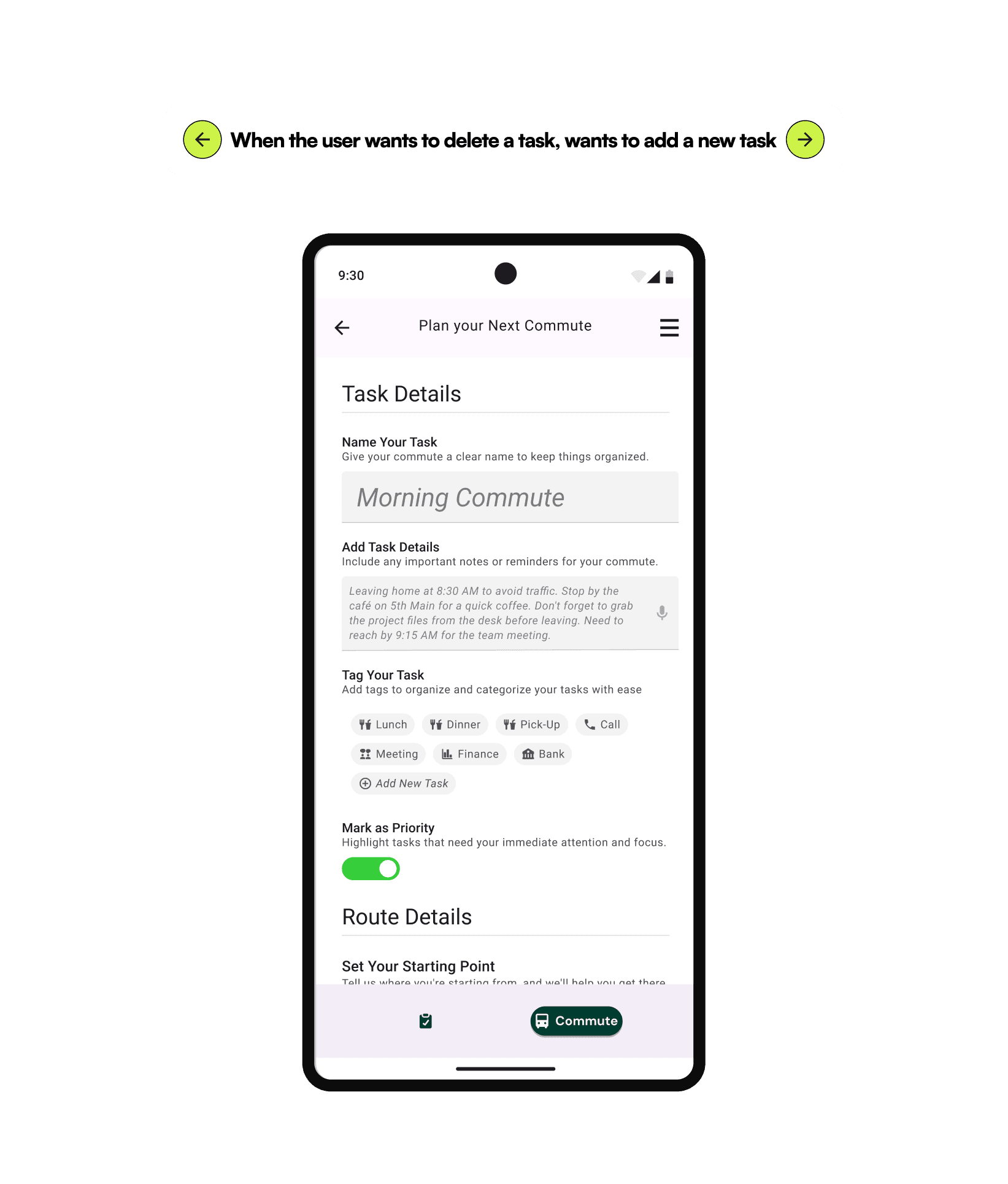
To know more about what people thought, I conducted a couple rounds of interviews with 10+ people aged 21–35 who either commute daily or have flexible routines.
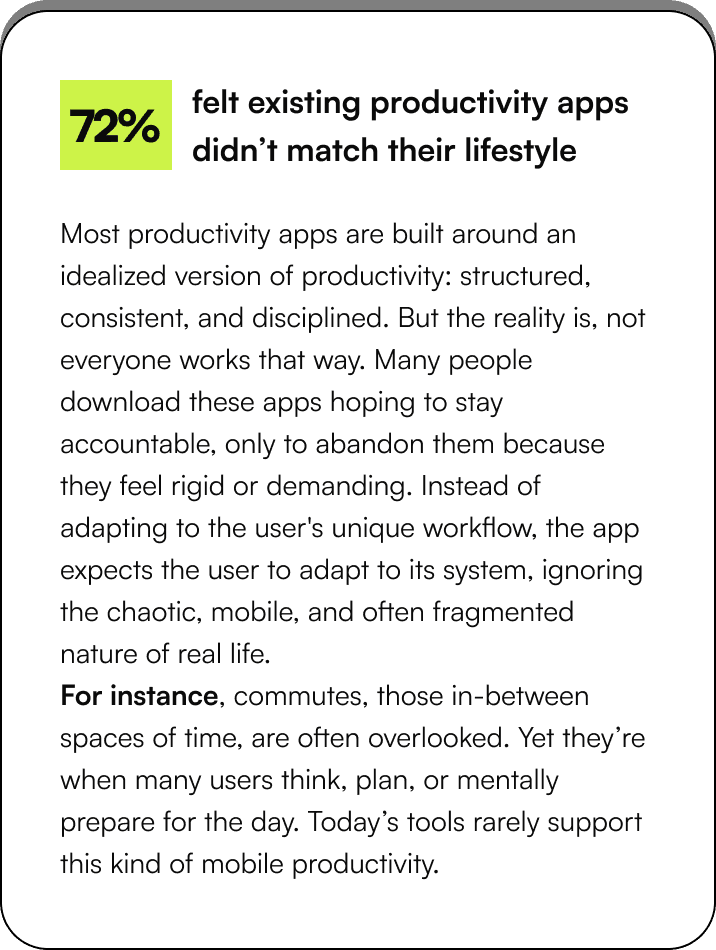
72%
felt existing productivity apps didn’t match their lifestyle
Most productivity apps are built around an idealized version of productivity: structured, consistent, and disciplined. But the reality is, not everyone works that way. Many people download these apps hoping to stay accountable, only to abandon them because they feel rigid or demanding. Instead of adapting to the user's unique workflow, the app expects the user to adapt to its system, ignoring the chaotic, mobile, and often fragmented nature of real life.
For instance, commutes, those in-between spaces of time, are often overlooked. Yet they’re when many users think, plan, or mentally prepare for the day. Today’s tools rarely support this kind of mobile productivity.
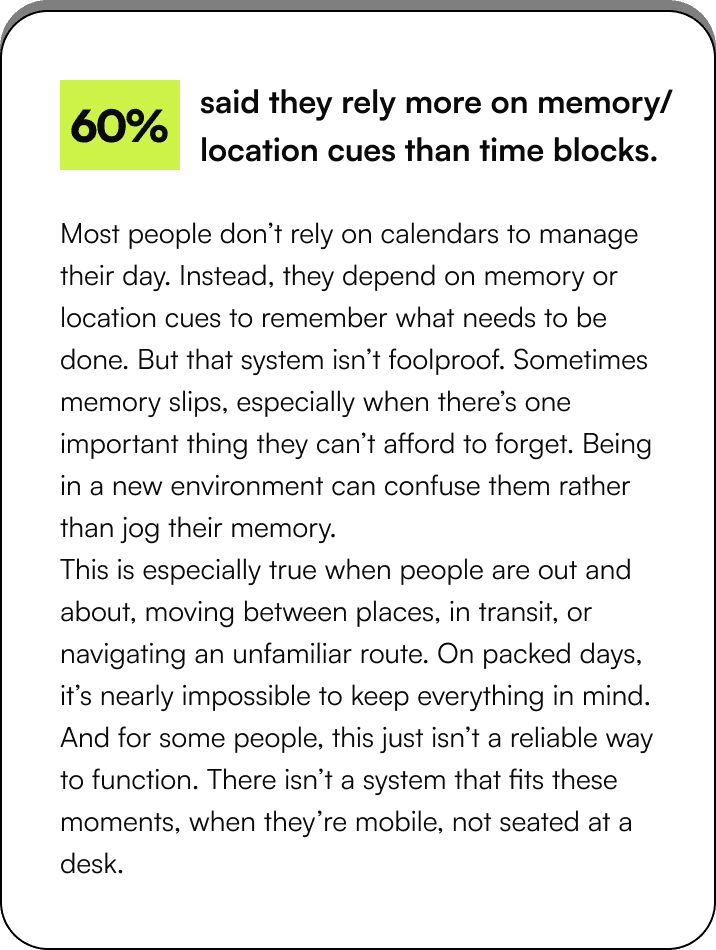
60%
said they rely more on memory/location cues than time blocks.
Most people don’t rely on calendars to manage their day. Instead, they depend on memory or location cues to remember what needs to be done. But that system isn’t foolproof. Sometimes memory slips, especially when there’s one important thing they can’t afford to forget. Being in a new environment can confuse them rather than jog their memory.
This is especially true when people are out and about, moving between places, in transit, or navigating an unfamiliar route. On packed days, it’s nearly impossible to keep everything in mind. And for some people, this just isn’t a reliable way to function. There isn’t a system that fits these moments, when they’re mobile, not seated at a desk.
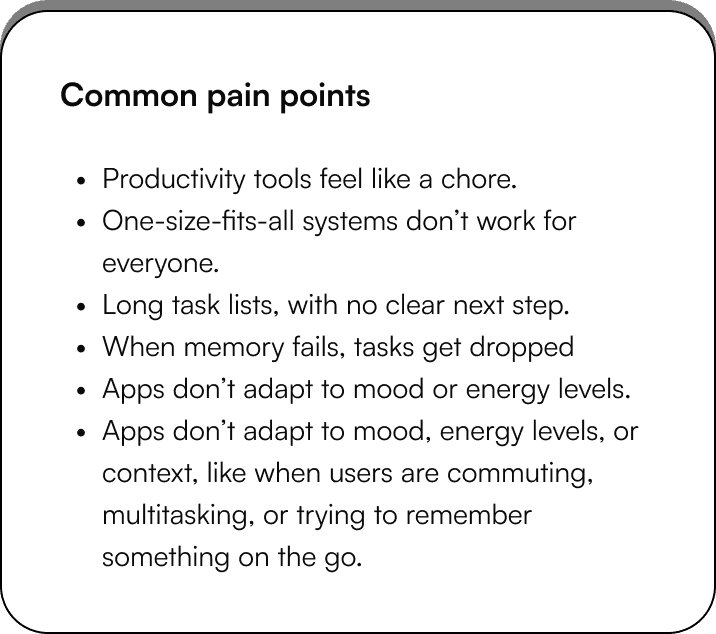
Common pain points
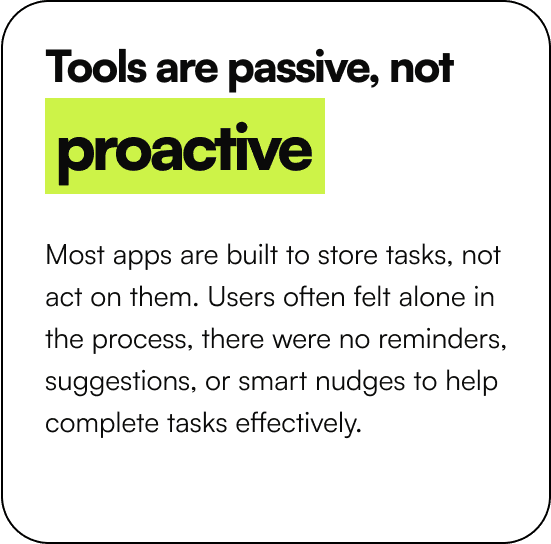
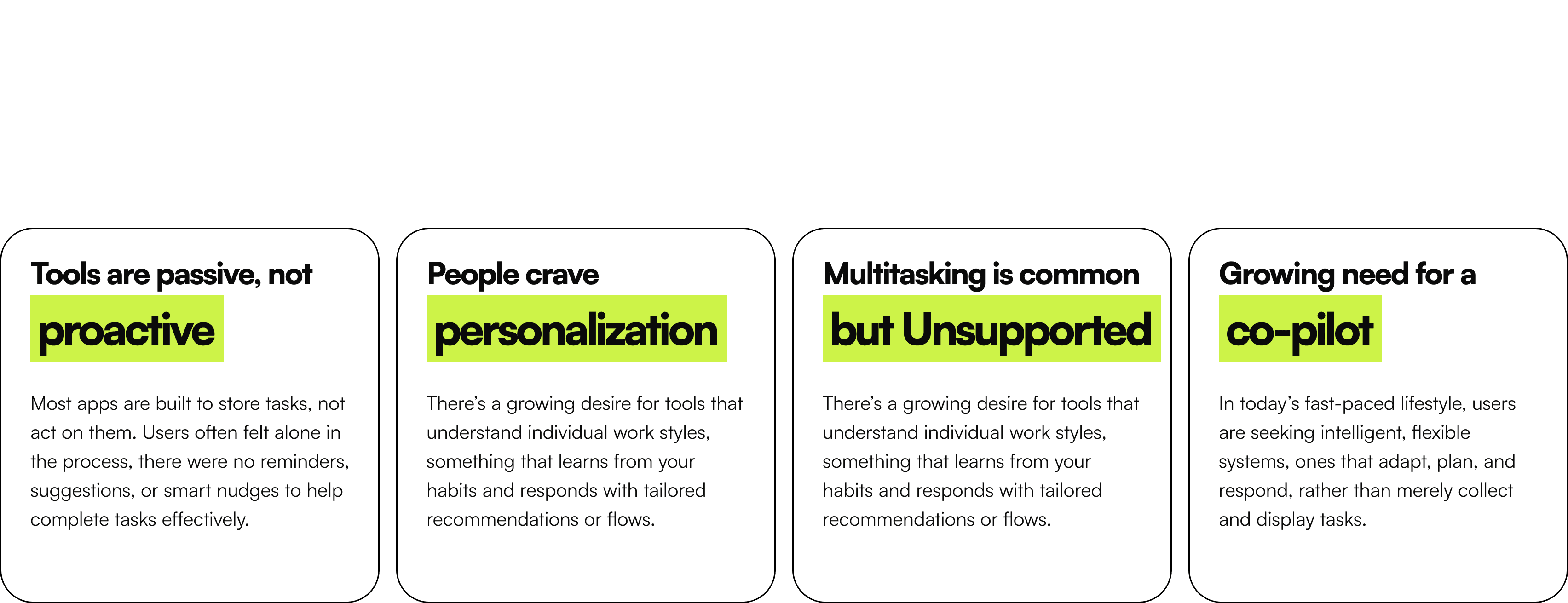
Productivity tools feel like a chore.
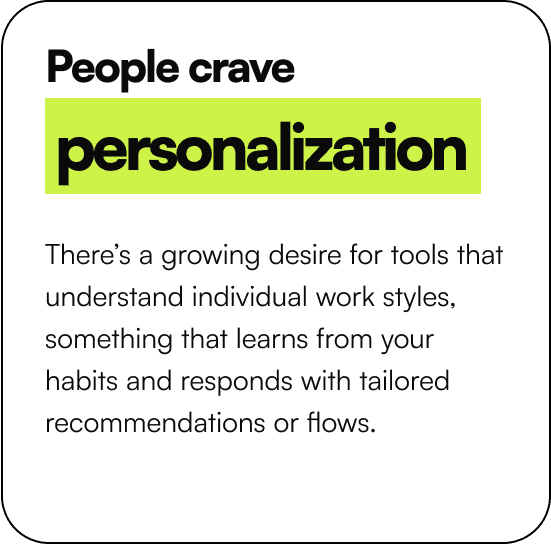
One-size-fits-all systems don’t work for everyone.
Long task lists, with no clear next step.
When memory fails, tasks get dropped.
Apps don’t adapt to mood or energy levels.
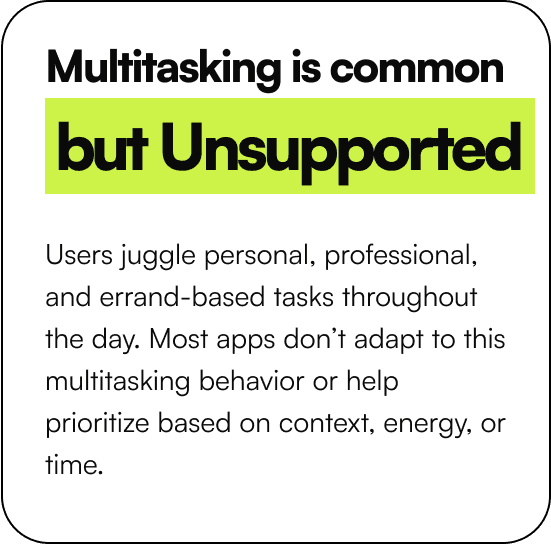
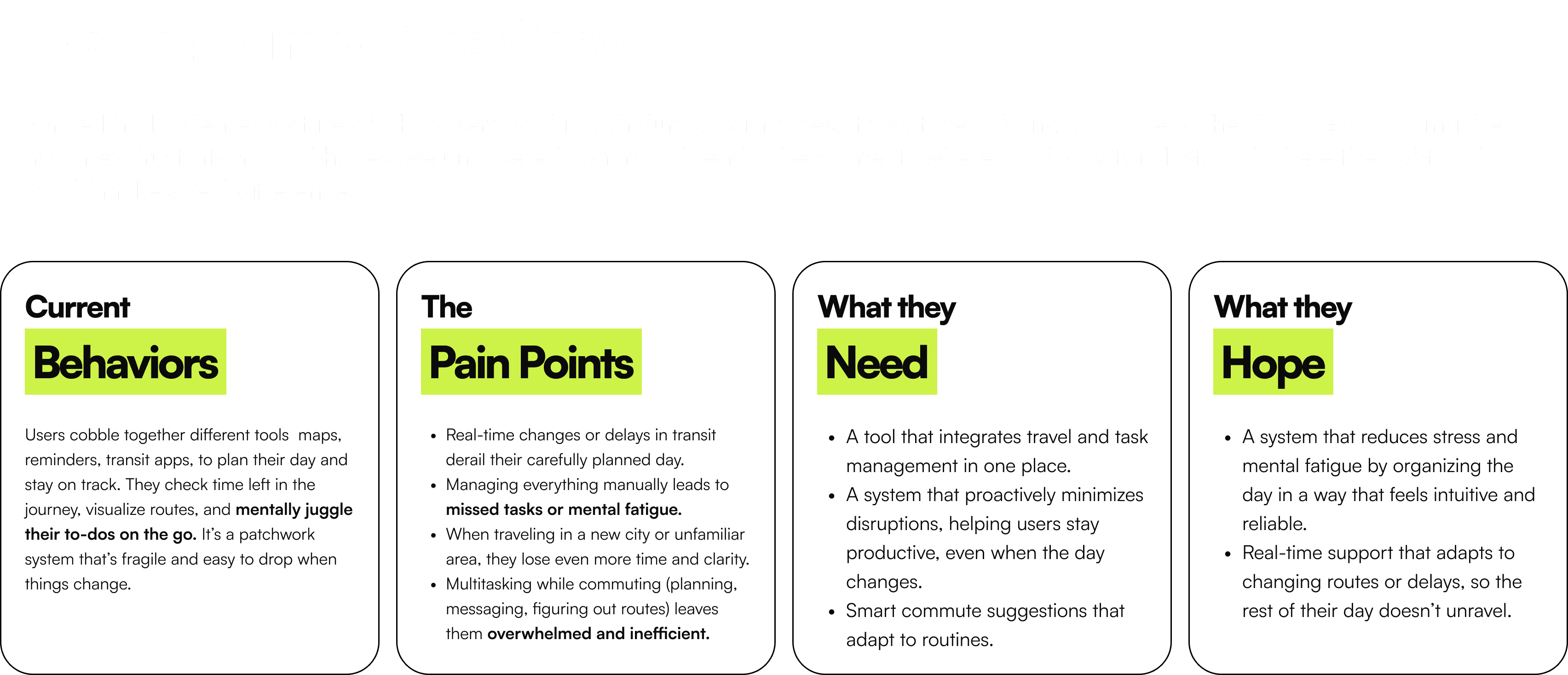
Apps don’t adapt to mood, energy levels, or context, like when users are commuting, multitasking, or trying to remember something on the go.
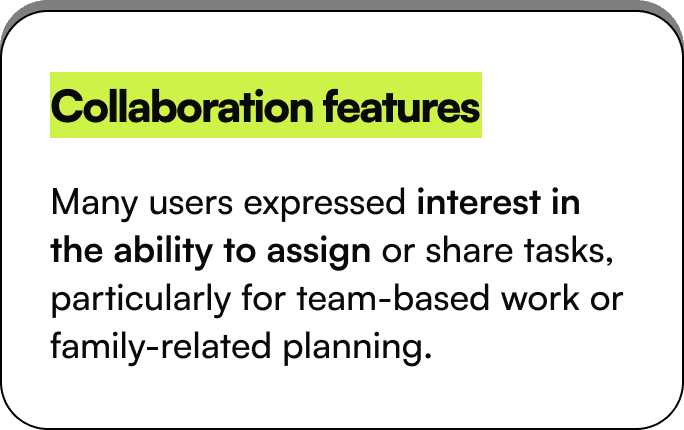
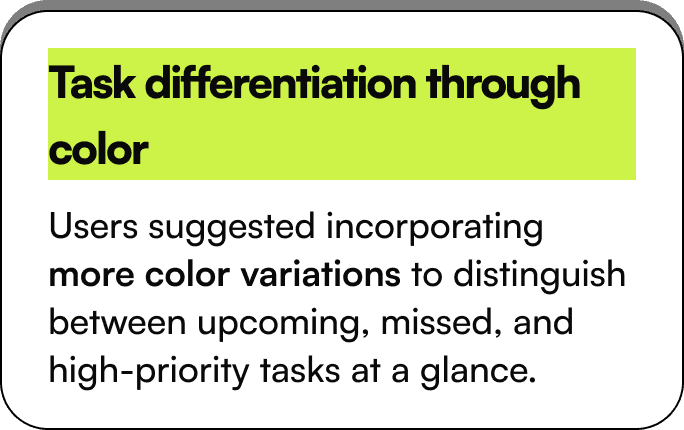
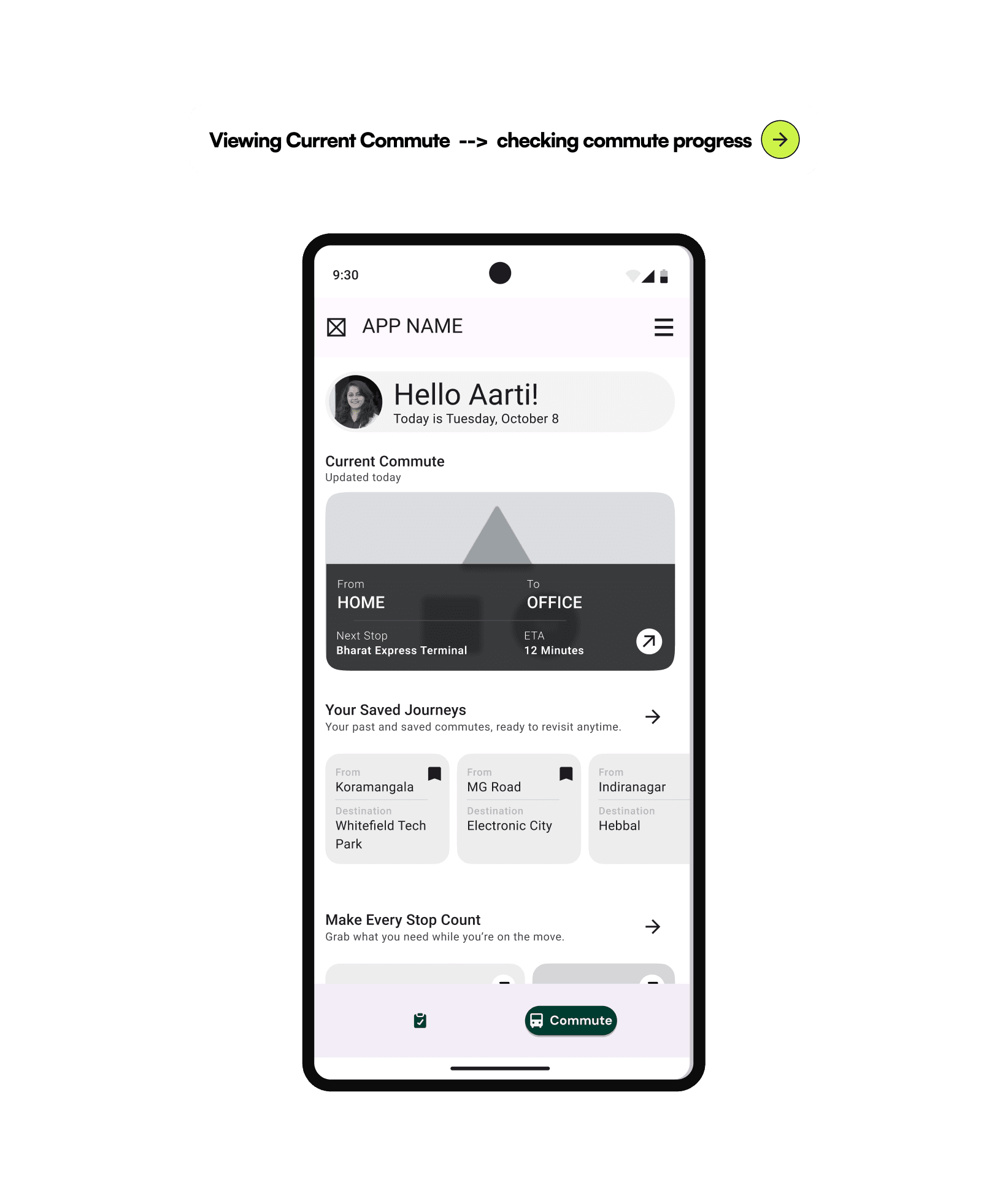

Key Insights
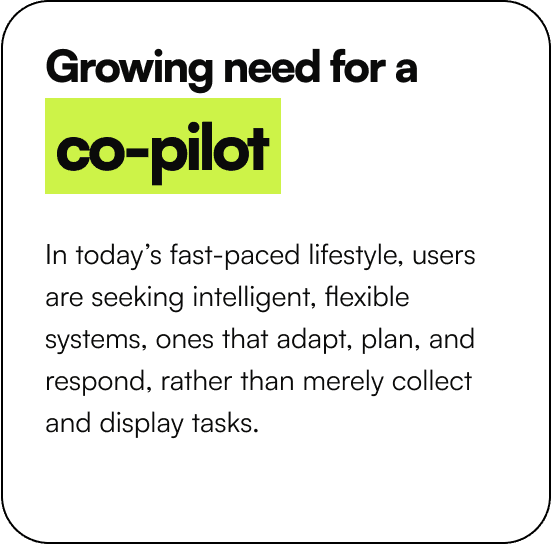
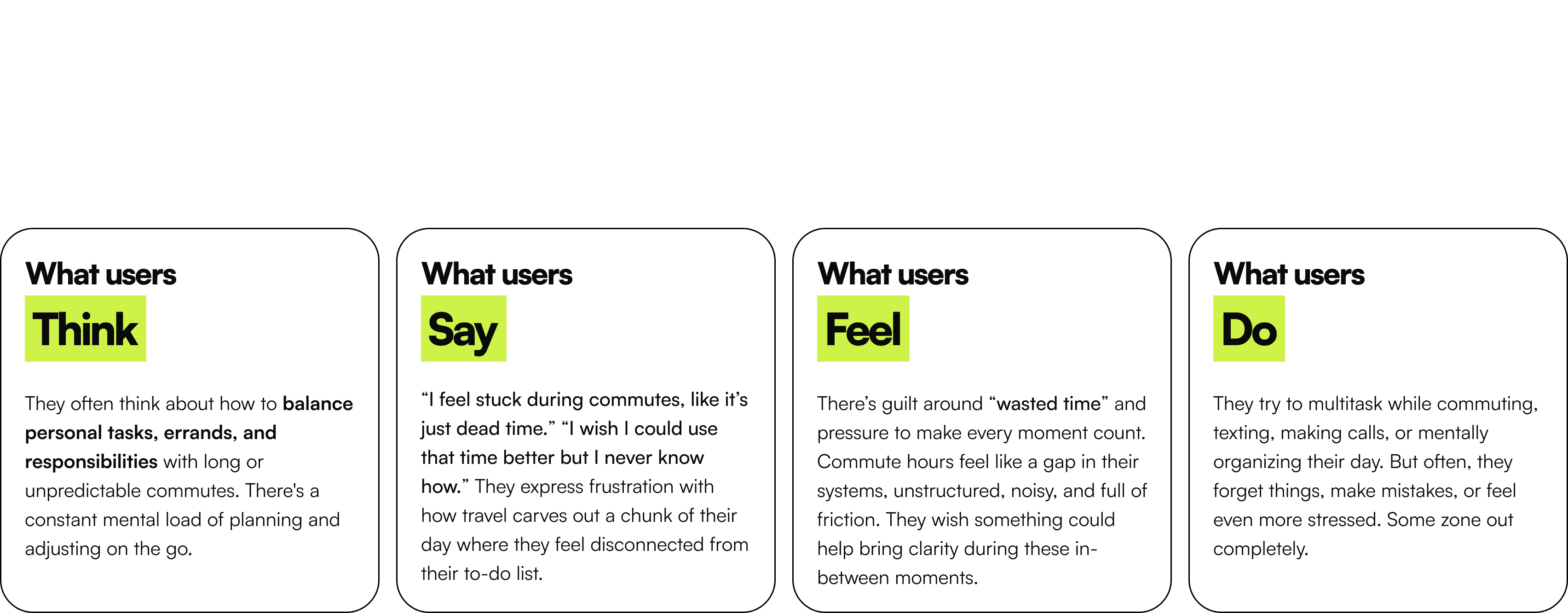
What I uncovered wasn’t a lack of drive, it was a lack of adaptability. Through interviews, I found that people aren’t unproductive they’re constantly juggling. But existing tools don’t support this reality. These insights helped us shift the lens from “doing more” to doing better with what time and context people actually have.
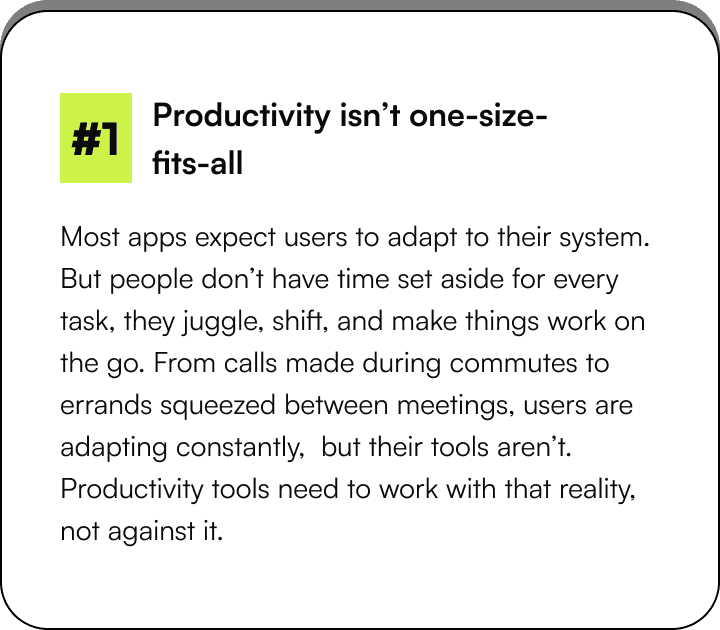
#1
Productivity isn’t one-size-fits-all
Most apps expect users to adapt to their system. But people don’t have time set aside for every task, they juggle, shift, and make things work on the go. From calls made during commutes to errands squeezed between meetings, users are adapting constantly, but their tools aren’t. Productivity tools need to work with that reality, not against it.
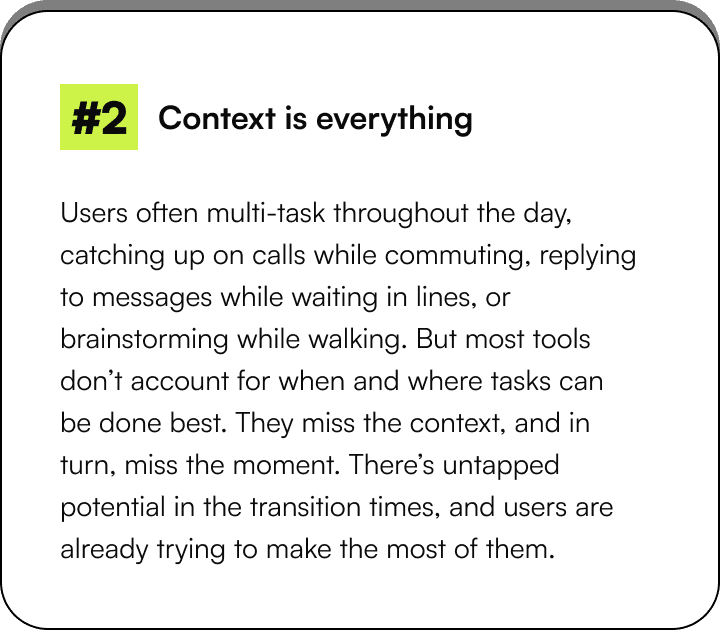
#2
Context is everything
Users often multi-task throughout the day, catching up on calls while commuting, replying to messages while waiting in lines, or brainstorming while walking. But most tools don’t account for when and where tasks can be done best. They miss the context, and in turn, miss the moment. There’s untapped potential in the transition times, and users are already trying to make the most of them.
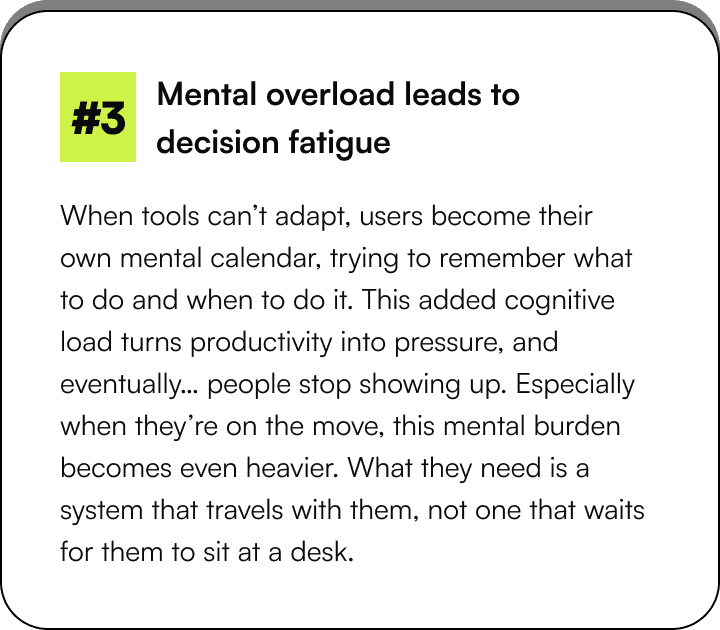
#3
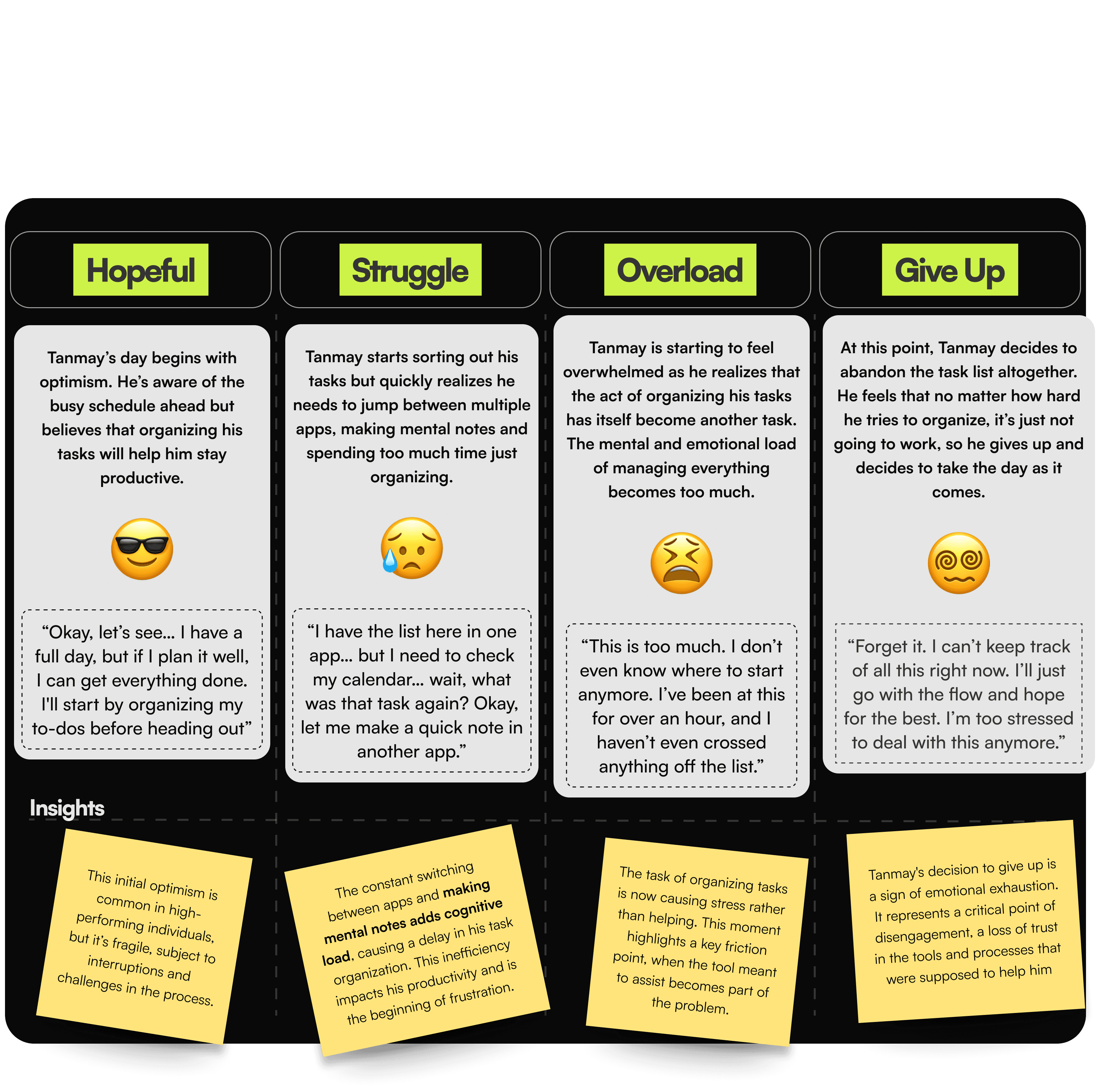
Mental overload leads to decision fatigue
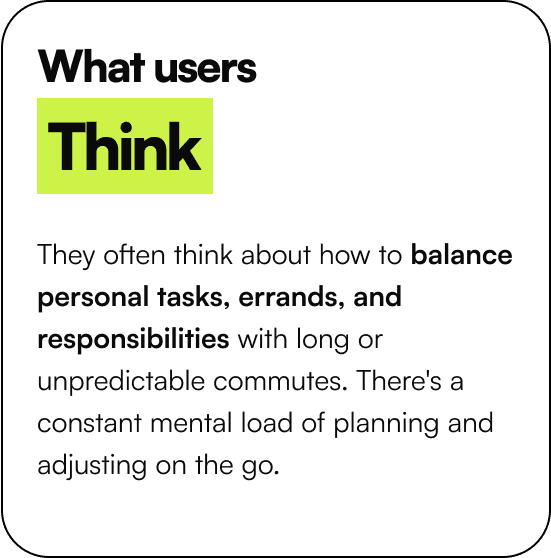
When tools can’t adapt, users become their own mental calendar, trying to remember what to do and when to do it. This added cognitive load turns productivity into pressure, and eventually… people stop showing up. Especially when they’re on the move, this mental burden becomes even heavier. What they need is a system that travels with them, not one that waits for them to sit at a desk.
Brain Storming
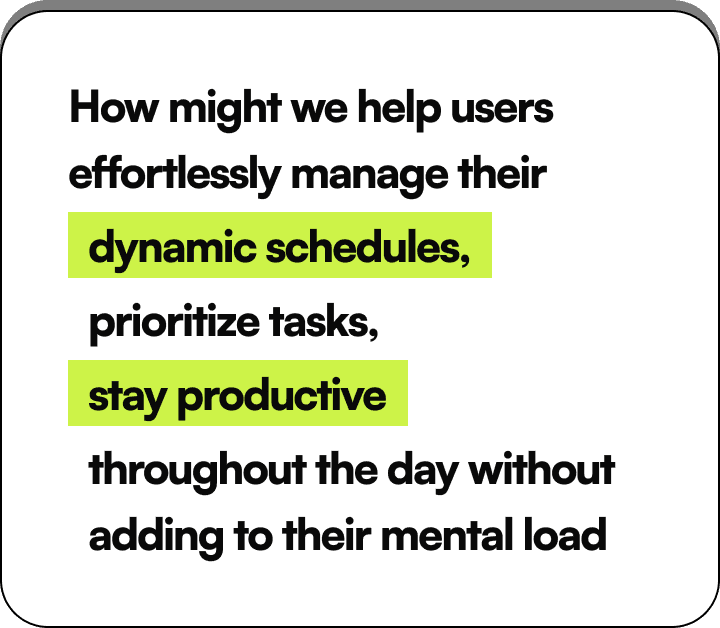
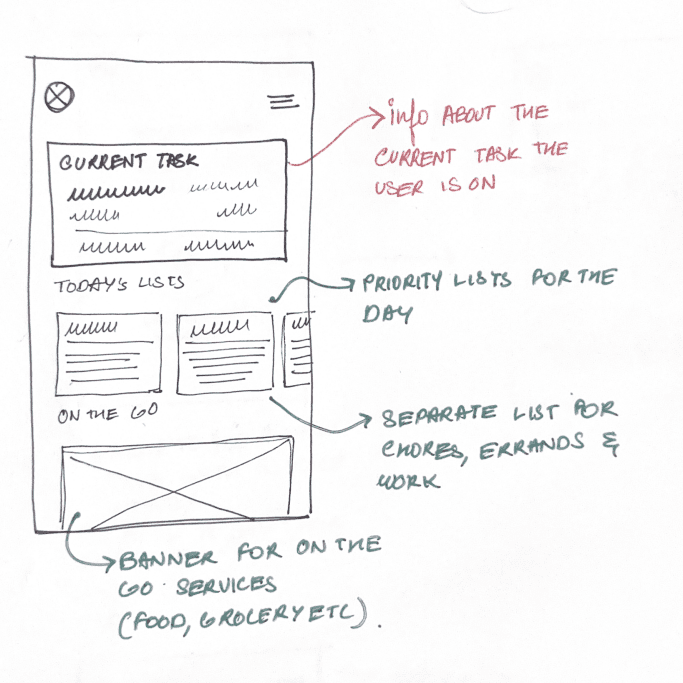
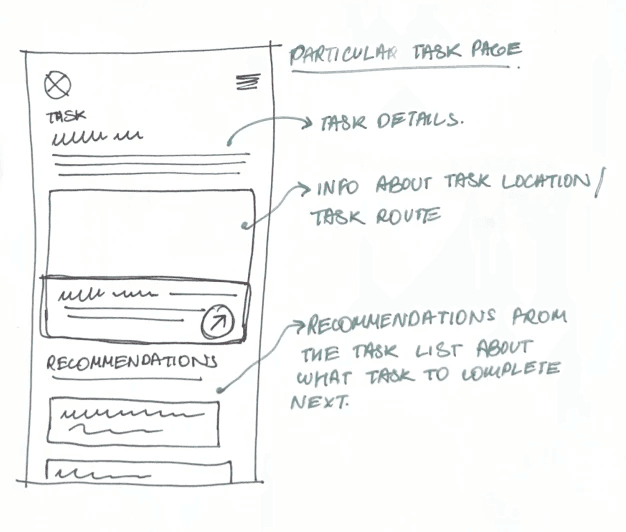
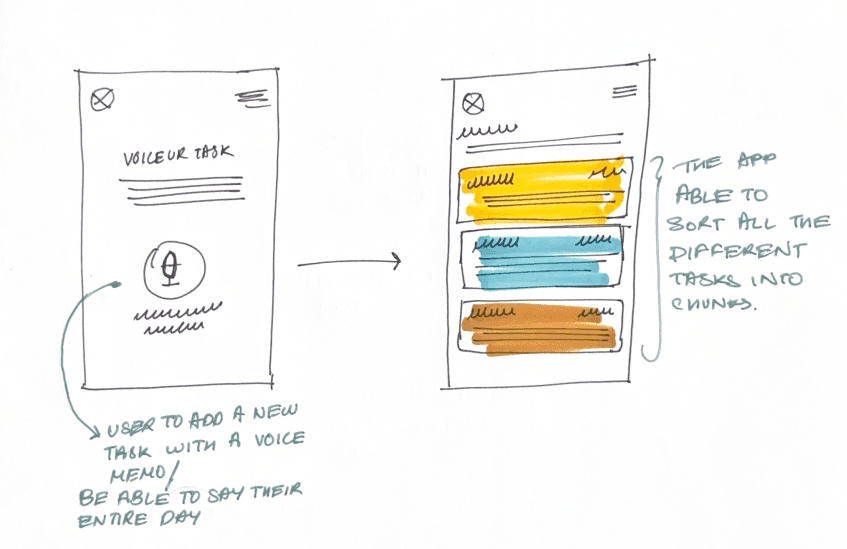
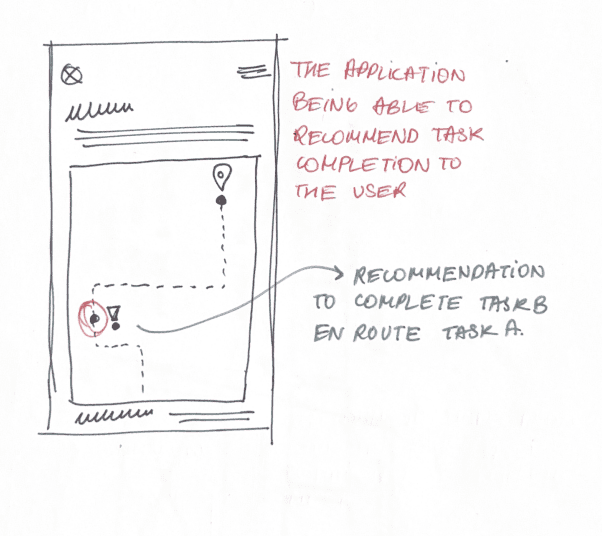
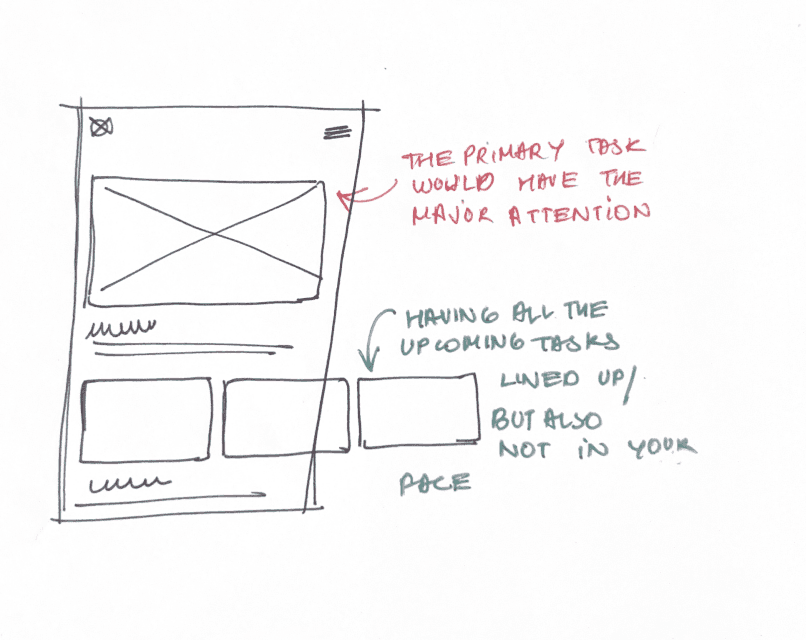
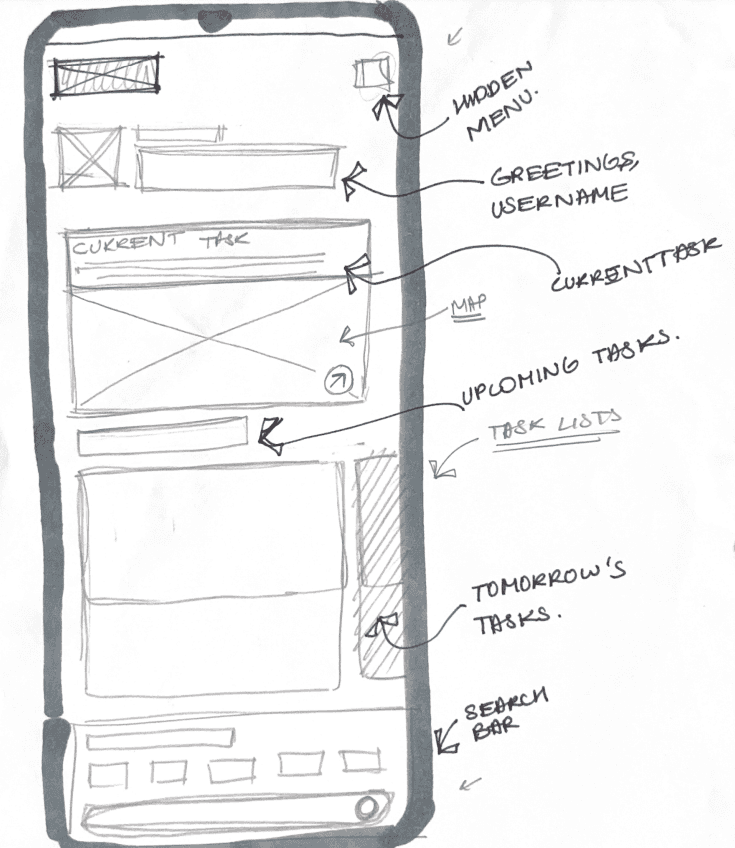
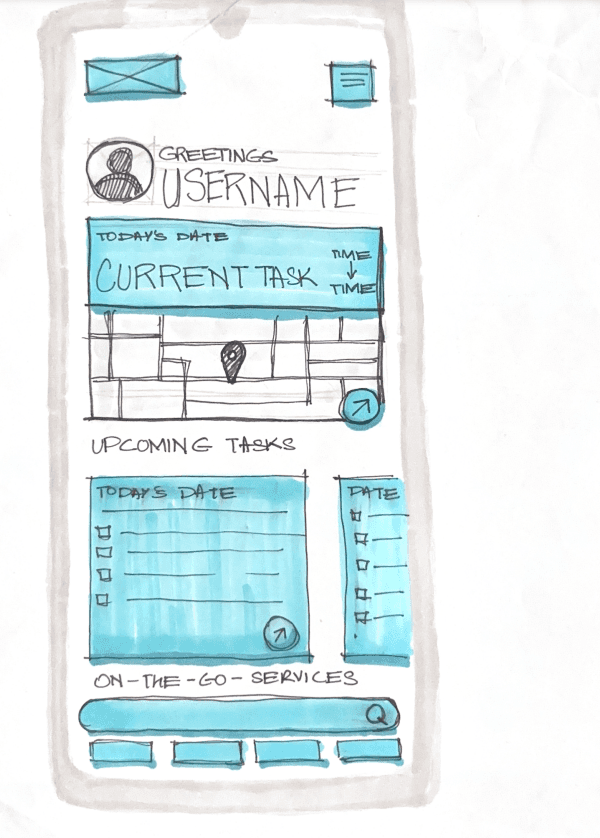
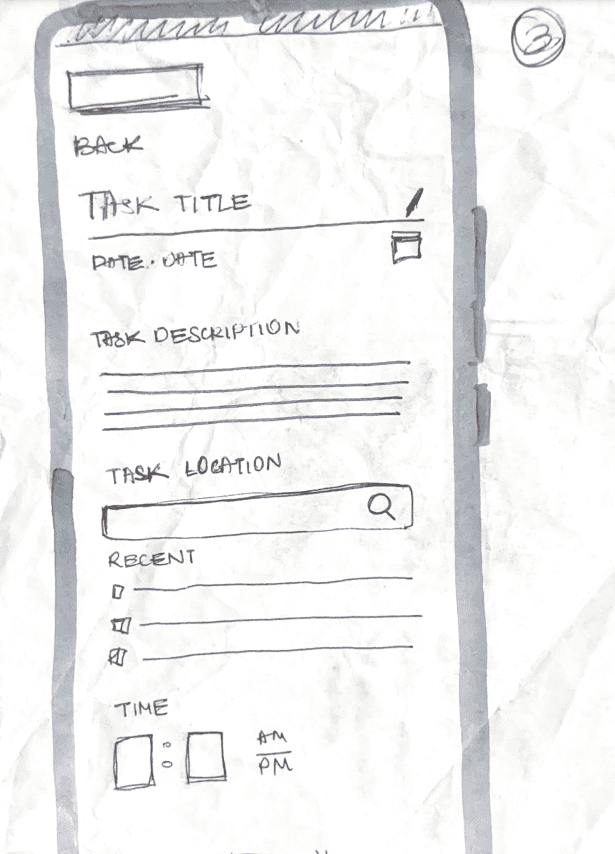
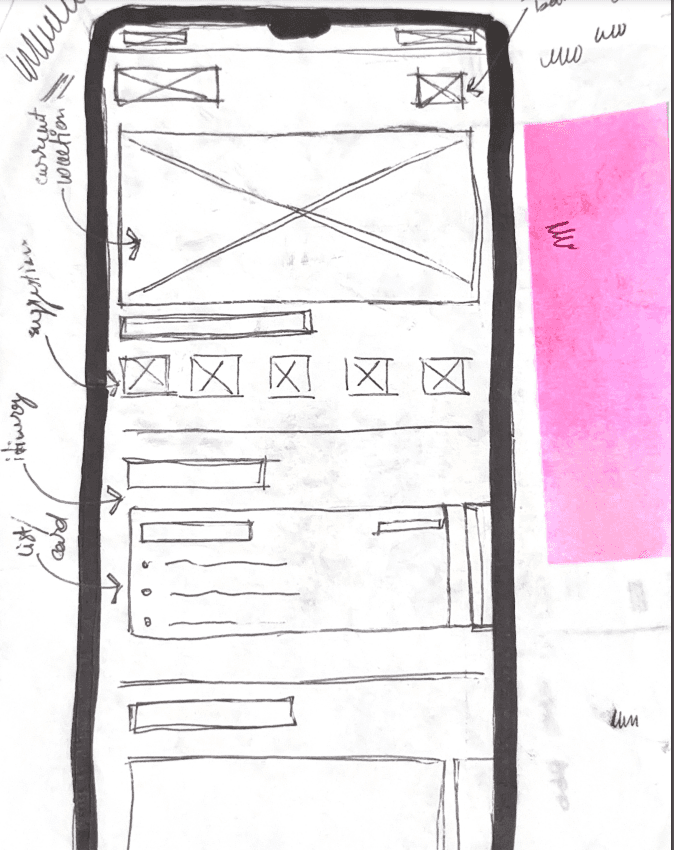
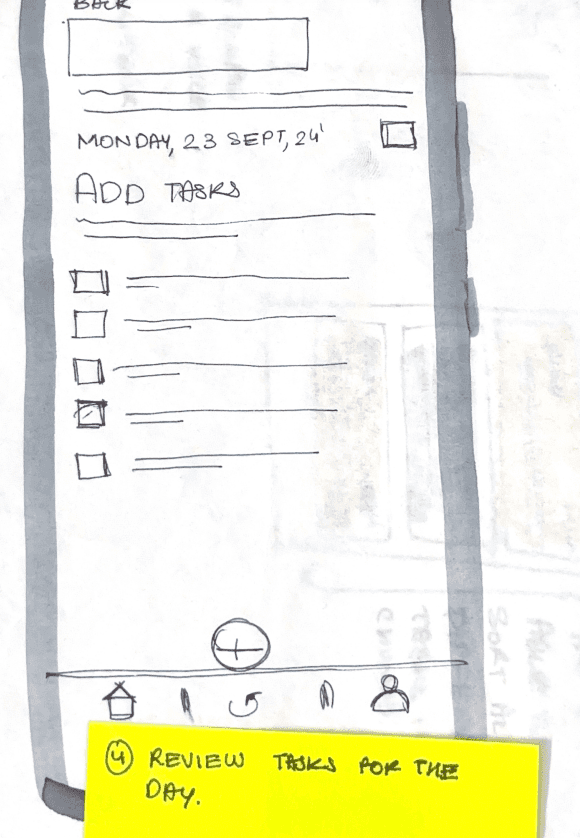
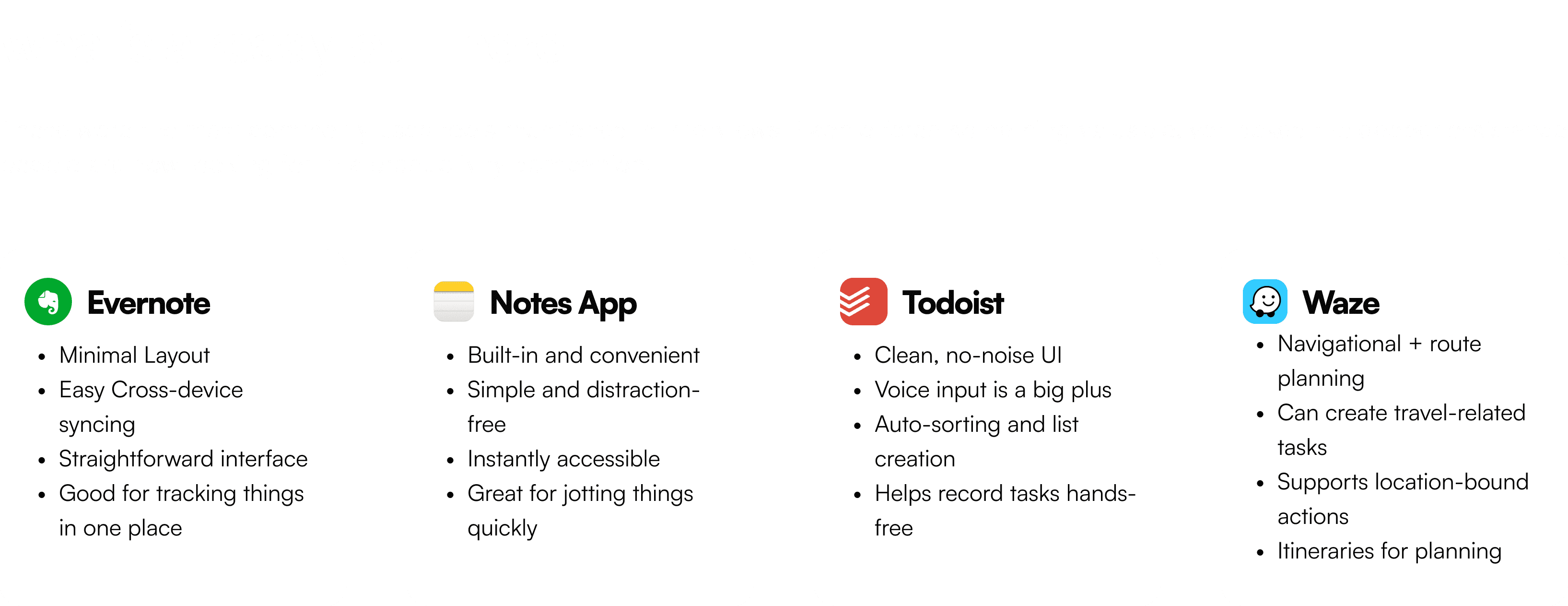
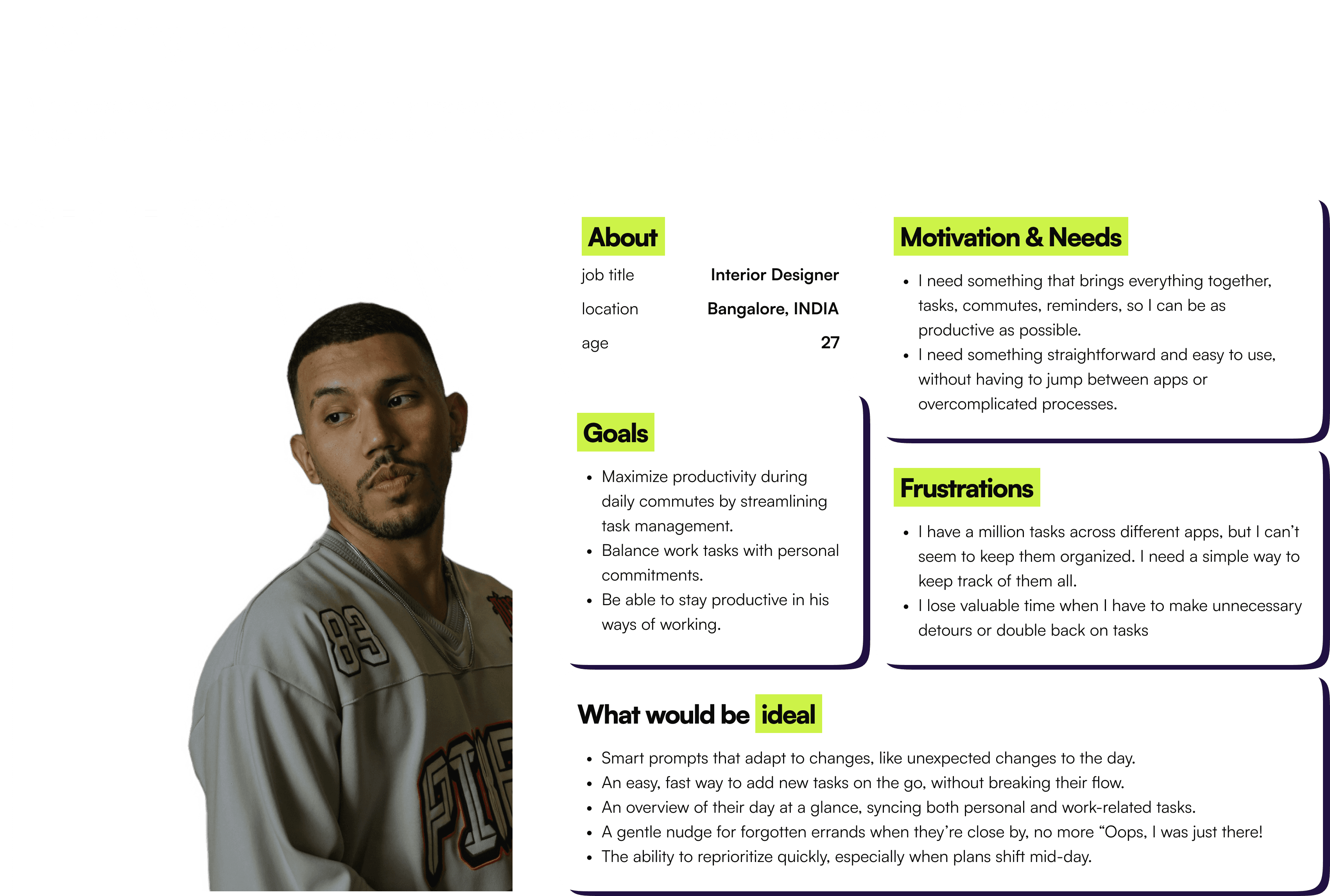
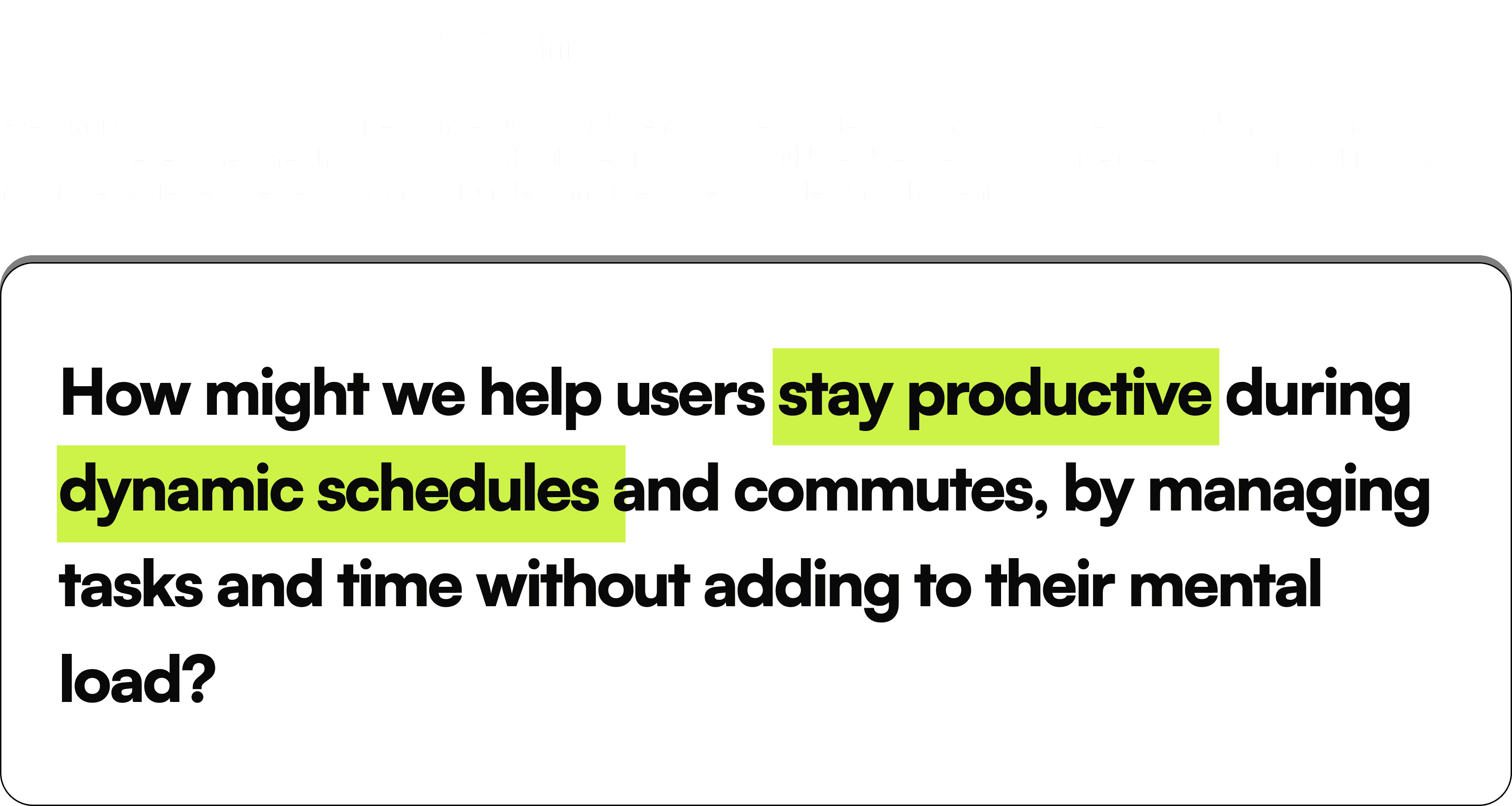
After defining the "How Might We" statement, I gained clarity on the niche of the problem. To explore possible solutions, I brainstormed and sketched out a variety of ideas, ranging from practical to unconventional. Not every idea would necessarily make the cut, but the goal was to get all possibilities on paper—because sometimes, the right idea emerges from a pool of raw, unfiltered concepts.